
Internal & External · Motorised · Made to Measure
Conservatory Blinds — Internal and External
Conservatory blinds do two different jobs, and most people only discover that after the first hot summer. Internal blinds control glare and privacy. External blinds control heat. We make both, and on a south- or west-facing roof the best answer is often a combination.
Internal vs external — what each one actually does
Sunlight turns into heat when it is absorbed. An internal blind sits under the glass, so the sunlight has already passed through the roof before it reaches the fabric; the blind cuts glare and gives privacy, but the heat it absorbs stays in the room. An external blind sits above the glass and intercepts the sun before it reaches the roof, so the heat stays outside and the glazing stays cool.
- Choose internal if glare, privacy, a softer light or evening insulation are the main goals, or if the roof faces north or east.
- Choose external if the conservatory overheats — a south- or west-facing roof in summer.
- Choose both for a room used all day in every season: external shading for summer heat, internal blinds for glare, privacy and a warmer feel on winter evenings.
Internal conservatory roof blinds
Our internal roof blinds use the same motorised, zip-guided system as our external blinds, installed beneath the glass instead of above it. The fabric runs in side guides and is held flat by spring tension, so it follows the pitch of the roof without sagging, and it is controlled by remote or wall switch.
Fabrics are chosen for the job: lighter fabrics soften glare while keeping the room bright, heavier or reflective-backed fabrics add privacy and reduce heat loss through the glass on cold evenings. Internal blinds are also the right choice for the vertical glazing of a conservatory, where external screens are not always practical.
External conservatory roof blinds
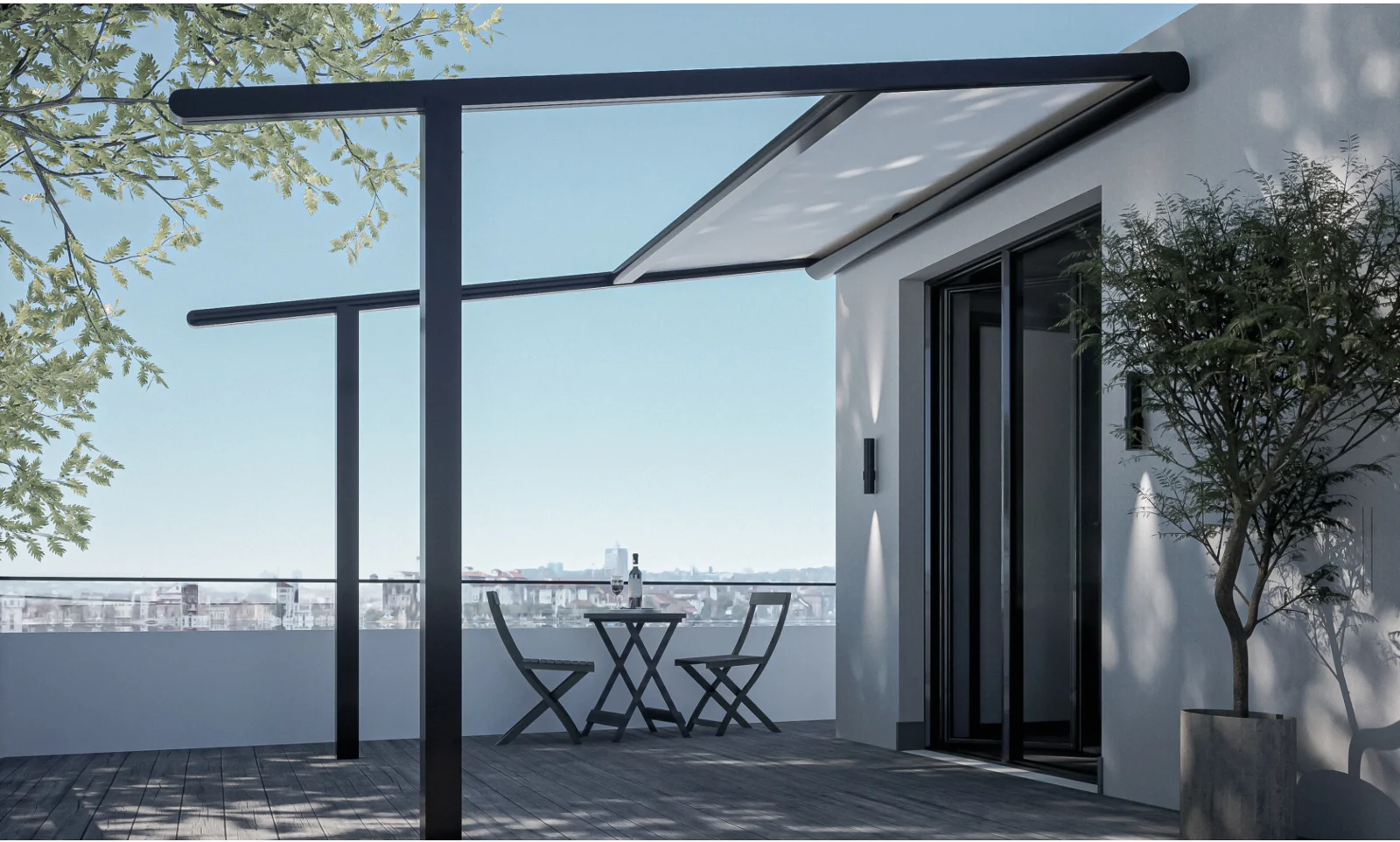
Each external blind is a motorised zip screen running horizontally above the roof glazing. The fabric is zipped into the side guides and held flat by spring tension in the bottom rail, so it stays taut and quiet instead of flapping or sagging. It is controlled by remote or wall switch, and wind sensors retract it automatically when the weather turns.
A single unit covers up to 6,000 mm wide and 6,000 mm in projection, with a maximum area of 18 m². Larger roofs are covered by placing units side by side, one per bay, so each bay can be shaded independently. Cassettes, guides and rails are aluminium, powder-coated in RAL colours or woodgrain finishes to match the conservatory frame. Full specifications are on our external glass roof blind page.
Fitting to an existing conservatory
Both types fit an existing conservatory without replacing the glazing. The survey checks the roof structure, the fixing points and — for external blinds — the space for the cassette at the top of the slope.
If the roof itself is the problem — old polycarbonate, discoloured and loud — blinds will only mask it. In that case look at conservatory roof replacement first, then add blinds to the new glass roof.
For glass roofs, sunrooms and pergolas
The same blinds work under or over any glass roof: a glass conservatory, a sunroom, a fixed glass roof pergola or a skylight. All our shading products are listed under roof blinds and shading.
Cost
Price depends on the number and size of roof panes, internal or external, manual or motorised, and the fabric. As a guide, electric roof blinds typically cost £600 – £2,000 per roof, excluding VAT. Request a free survey and we will measure every pane.
FAQ
Frequently asked questions
Are internal or external conservatory blinds better?
They solve different problems. External blinds are far better at keeping heat out, because they stop the sun before it passes through the glass. Internal blinds are better for glare, privacy and keeping warmth in on winter evenings.
Do conservatory roof blinds stop overheating?
External blinds do, substantially. Internal blinds reduce glare but the heat they absorb stays inside the room.
Can I have internal and external blinds on the same roof?
Yes, and on south-facing roofs it is often the best combination.
Can blinds be fitted to an existing conservatory?
Yes. Both types are made to measure for the existing roof panes and do not require any change to the glazing.
What happens to external blinds in strong wind?
Wind sensors retract them automatically. In normal conditions the fabric is held flat in zip guides.
How big can an external roof blind be?
Up to 6,000 × 6,000 mm and 18 m² per unit. Larger roofs use several units side by side.
Free, No-Obligation Quote
Get your free design and quote
Tell us about your project and we will send a free design and quote. Manufacture usually takes up to 6–8 weeks, and a standard house installation 1–3 days.
- Choose the roof and walls you are interested in.
- Add approximate sizes in millimetres.
- Leave your details — we prepare a design and quote.