
Motorised Vertical Zip Screens · Made to Measure in the UK
Zip Screen Blinds for Pergolas and Terraces
A zip screen blind closes the open sides of a pergola, veranda or terrace at the touch of a button. The fabric is zipped into aluminium side guides, so it stays flat in wind — up to 5,500 mm wide and 4,000 mm high per screen.
Why Choose Zip Screens?
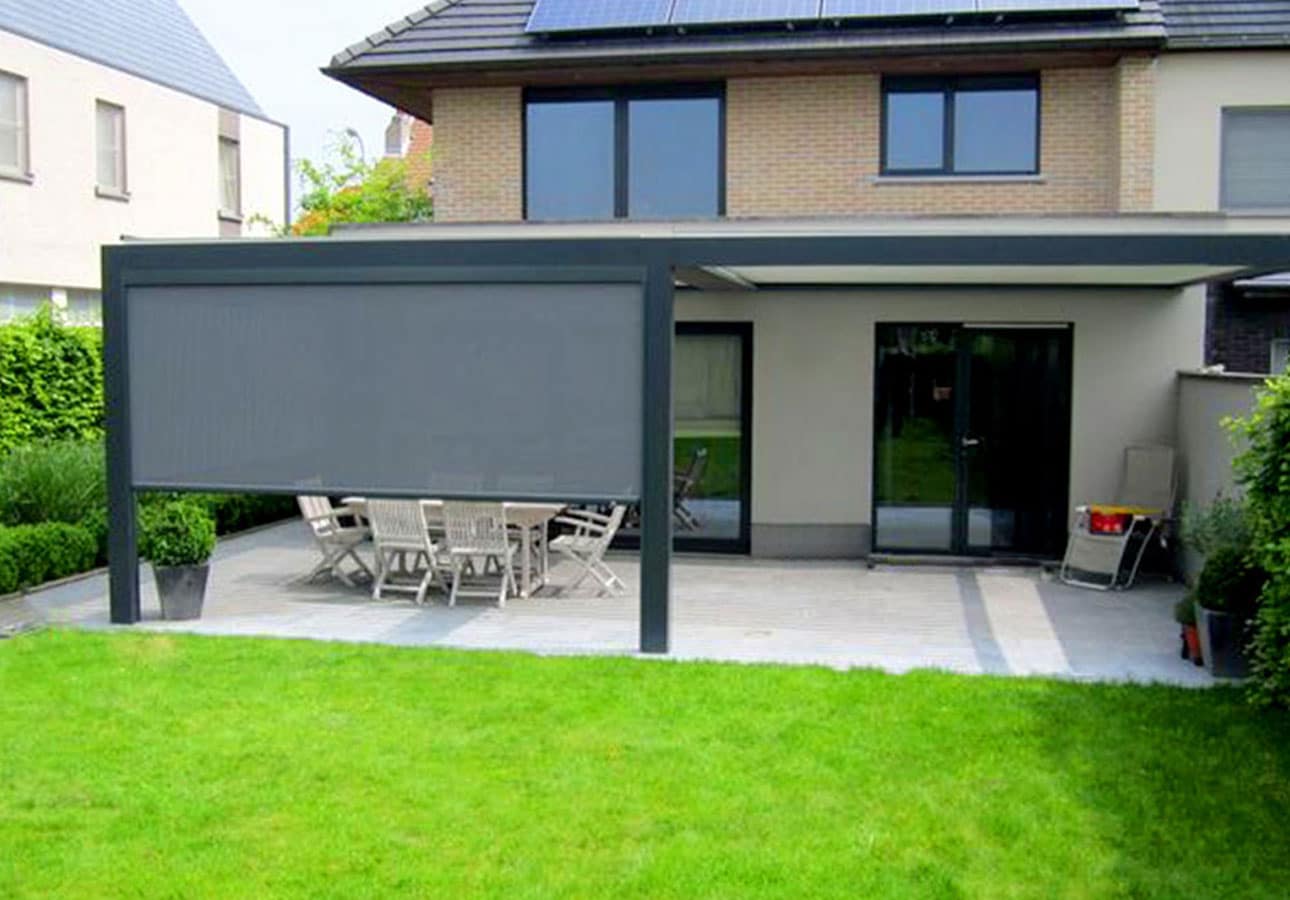
A roof only solves half the problem. Low sun, wind and passers-by all come from the side, and that is what a vertical screen deals with — without building a wall you cannot open again.

Locked in the Guides
The zip welded to the fabric edge runs inside the side guides, so the screen cannot pull out or flap. That is what lets it work at 4 m heights.
Shade Without Darkness
Choose the openness of the fabric: an open weave keeps the view and cuts glare; a blockout fabric gives complete privacy.
Wind-Tunnel Tested
Fabric and aluminium components are tested to 172 km/h, so the screens stay usable on exposed terraces and upper floors.
Cassette and Guides
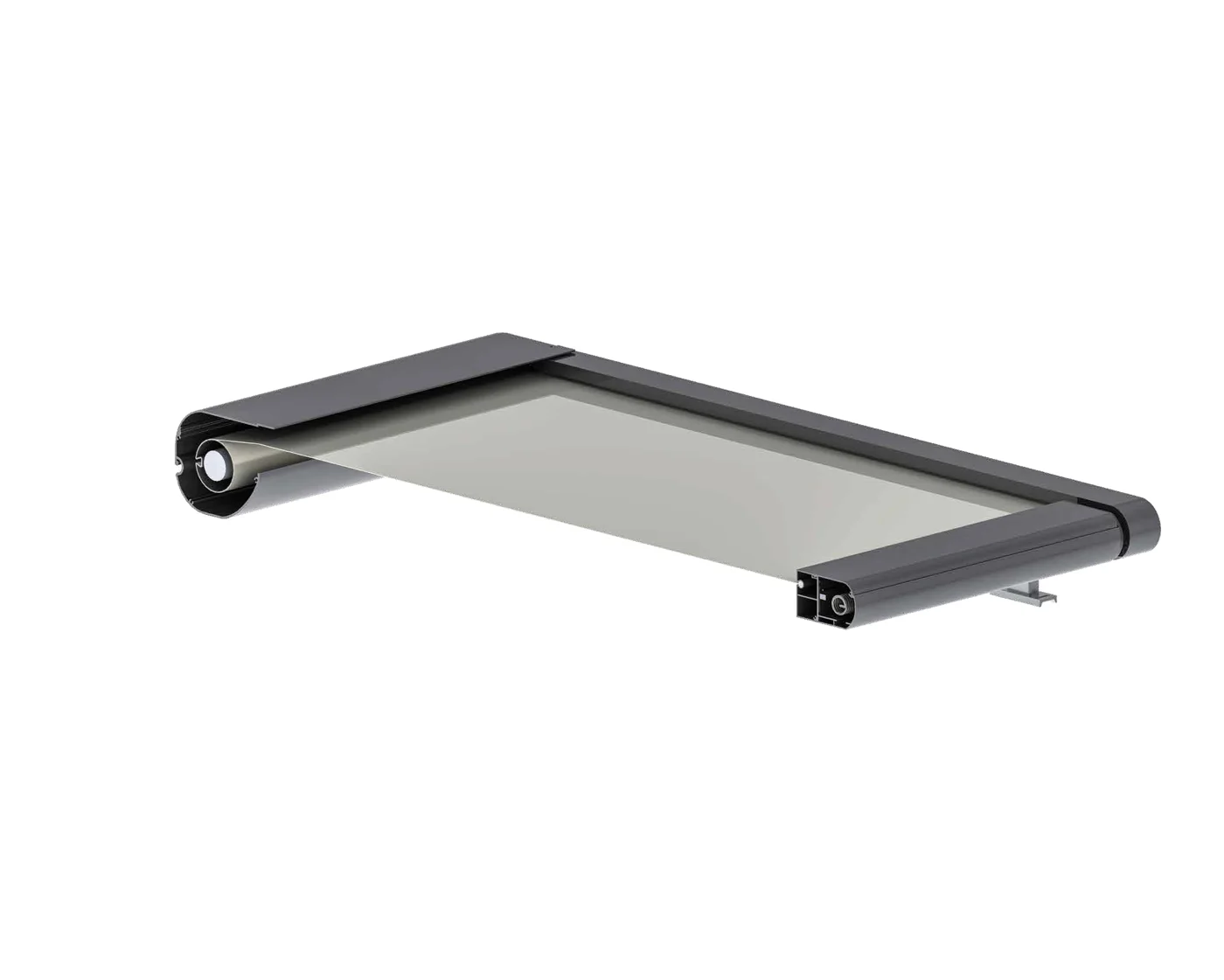
Aluminium cassette, continuous side guides and a weighted bottom bar. The fabric rolls fully into the box when open, out of the weather.
Fabric Range
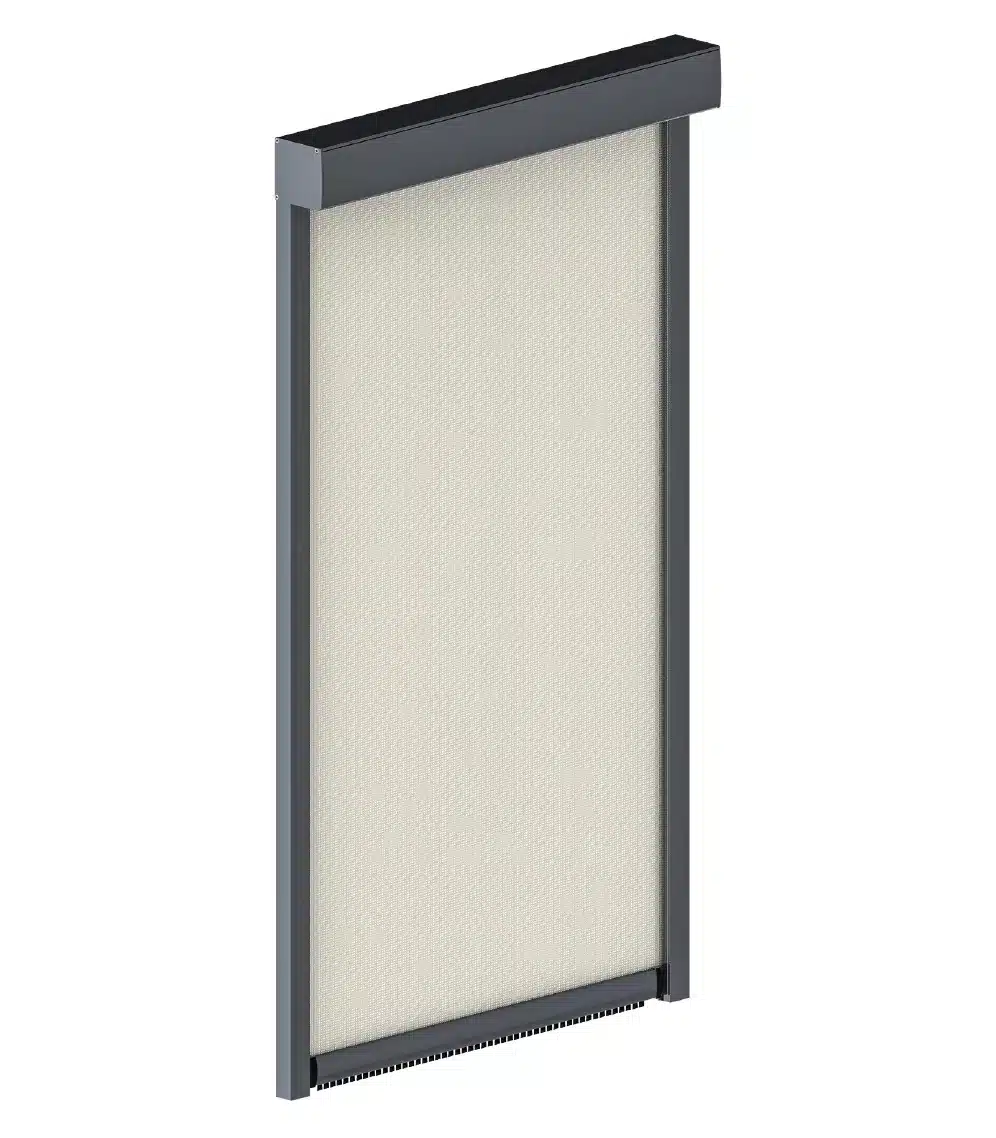
Outdoor screen fabrics made for UV, rain and impact, in open-weave and blockout versions and a wide colour range — printable to order.
Any RAL Colour
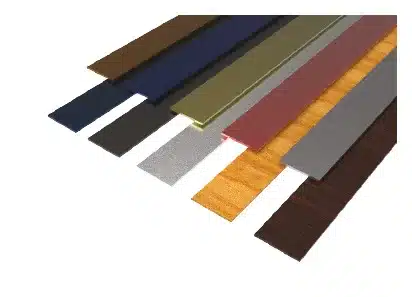
Cassette, guides and bottom bar are powder-coated to match the pergola, the windows or the building — woodgrain finishes available.
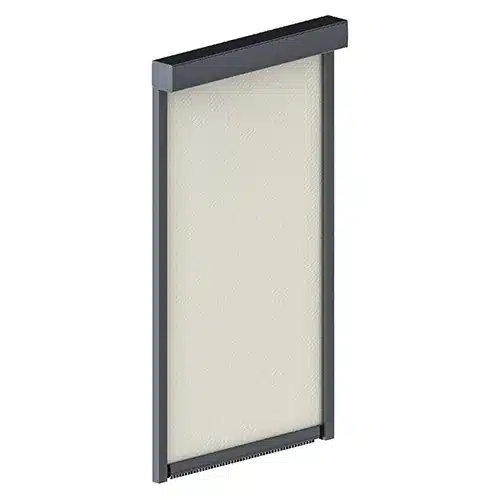
One Screen Covers Up to 16 m²
A single zip screen spans up to 5,500 mm wide and 4,000 mm high, with a maximum area of 16 m². Larger openings are divided into bays, one screen per bay, so the guides line up with the posts.
- Maximum width: 5,500 mm
- Maximum height: 4,000 mm
- Maximum area per screen: 16 m²
- Wind-tunnel tested to 172 km/h
We confirm the bay sizes at the free survey, after checking the structure the guides will be fixed to.
Where Zip Screens Are Fitted
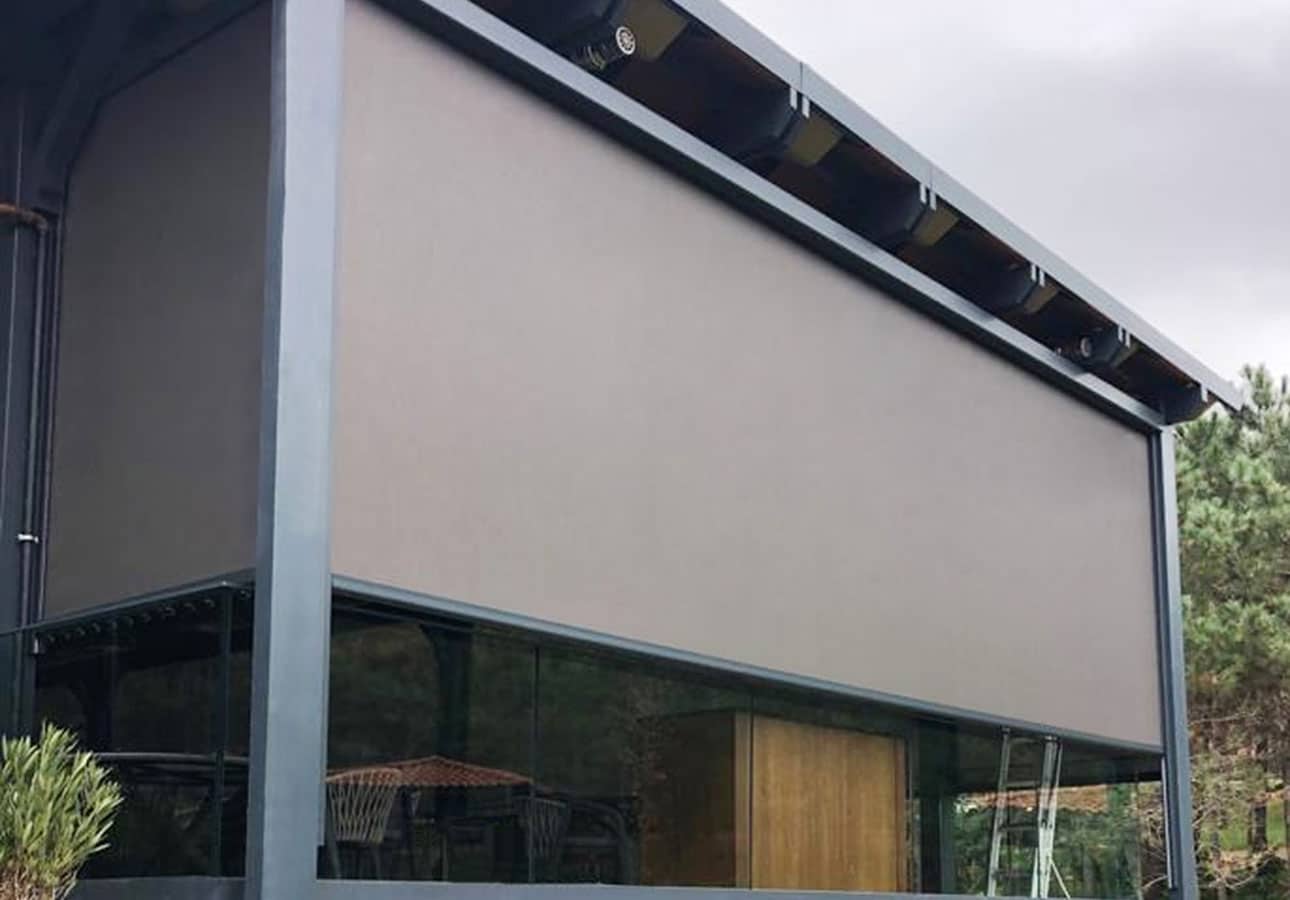

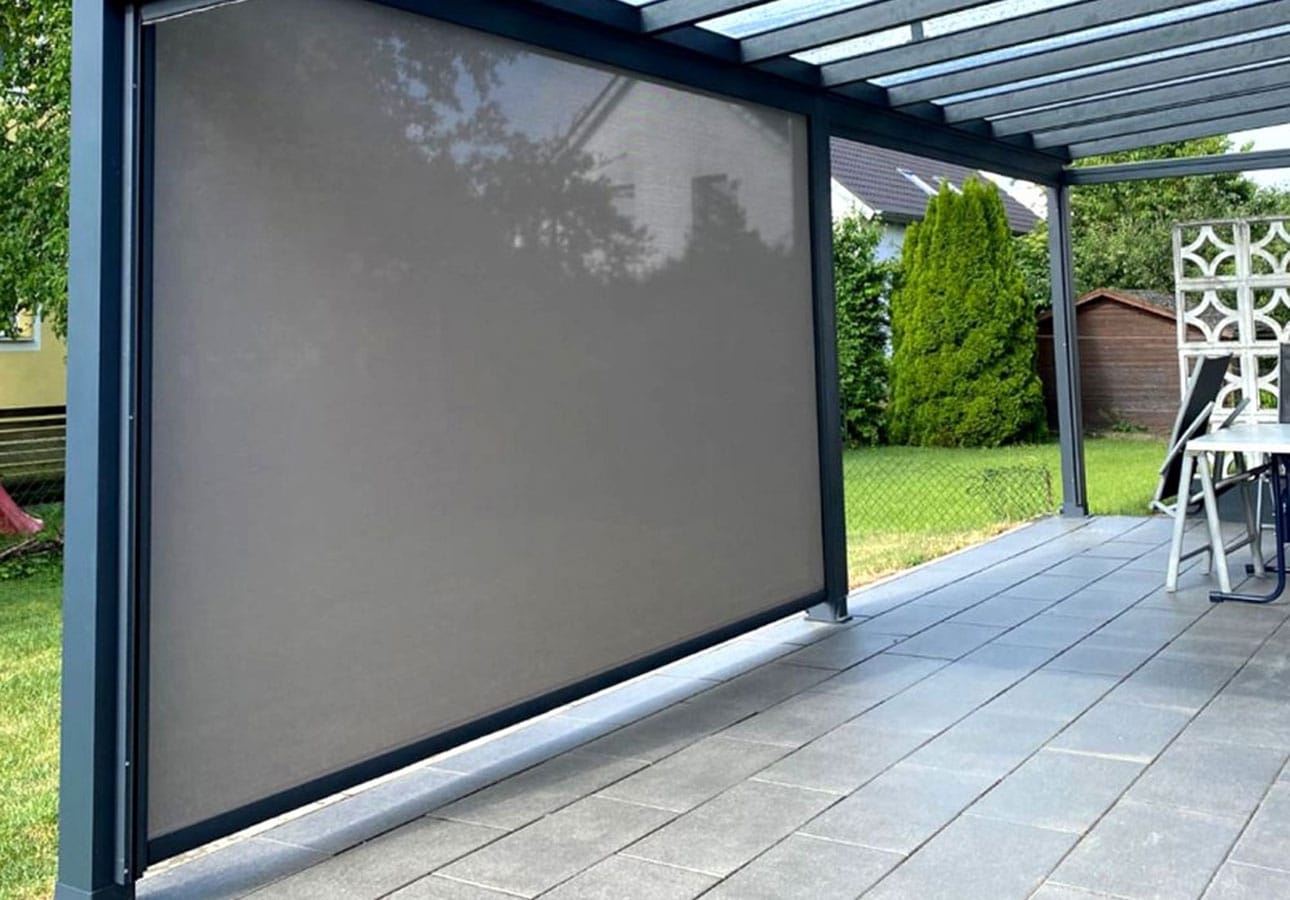


Screens can be recessed into the structure or surface-mounted, inside or outside the posts.
Controls
Remote, Switch or Sensor
Each screen runs on a quiet tubular motor. Operate them from a handset, a fixed wall switch, or a smart home system — and let sun and wind sensors close or retract them while nobody is there.
- Remote handset, wall switch or both
- Smart home integration available
- Sun and wind sensors optional
- Screens can be zoned and operated bay by bay
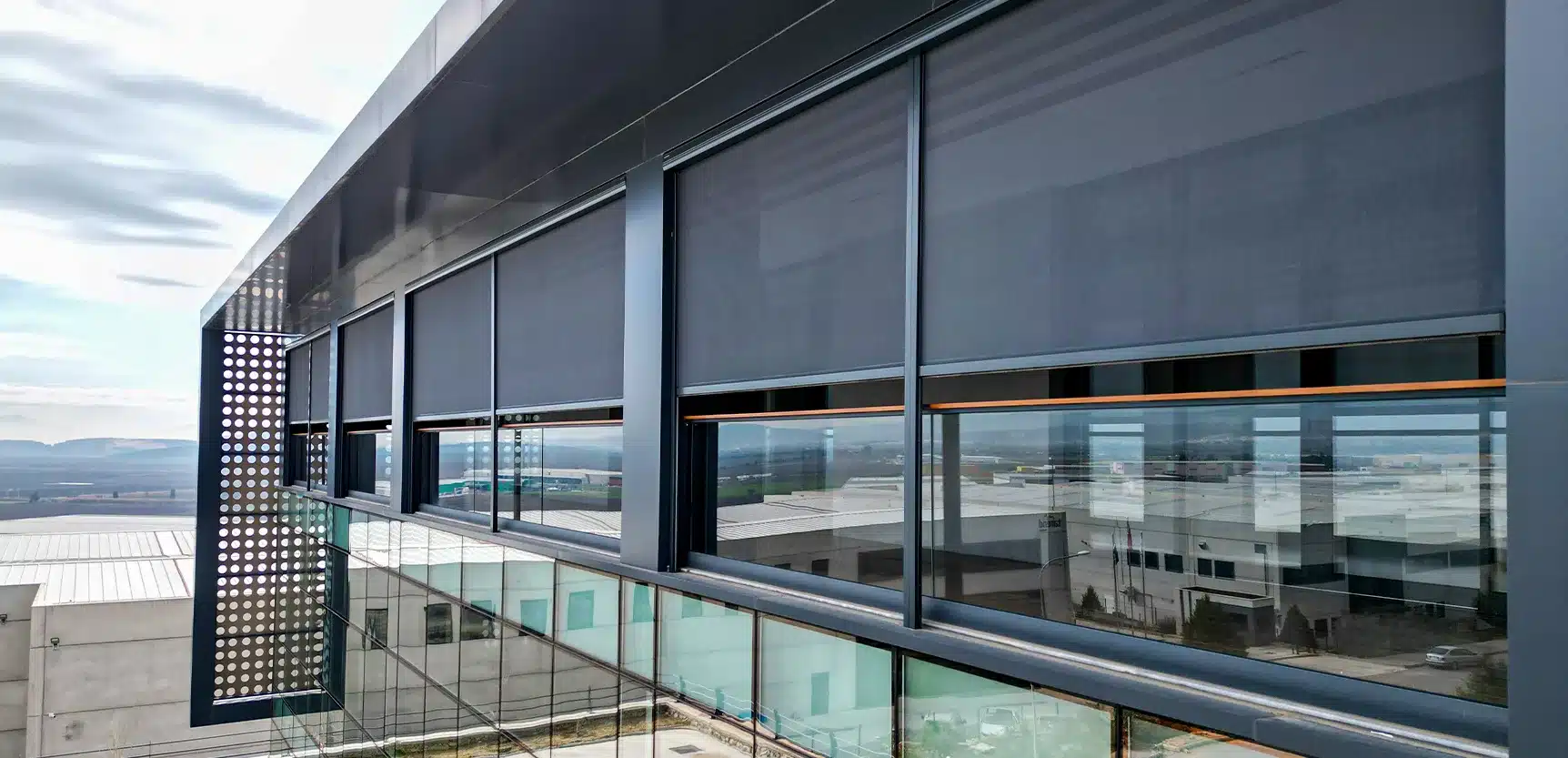
What Zip Screens Are Good At
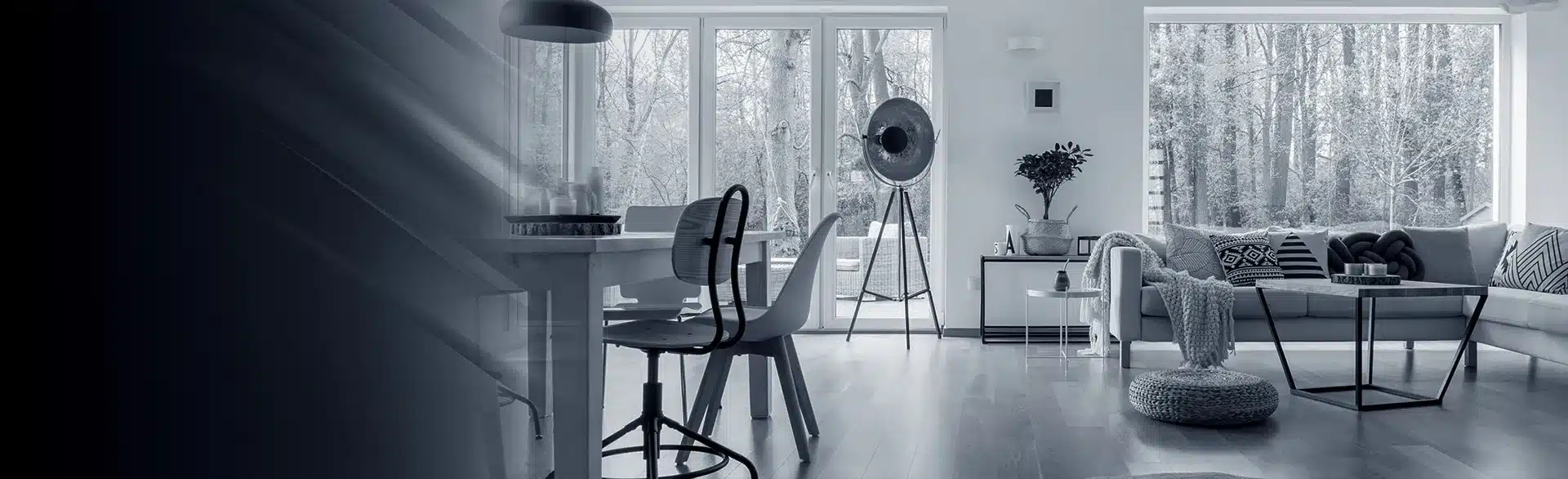
Glare and Heat
Stopping low sun before it reaches the glass keeps rooms behind the terrace cooler and screens out glare on screens and tables.
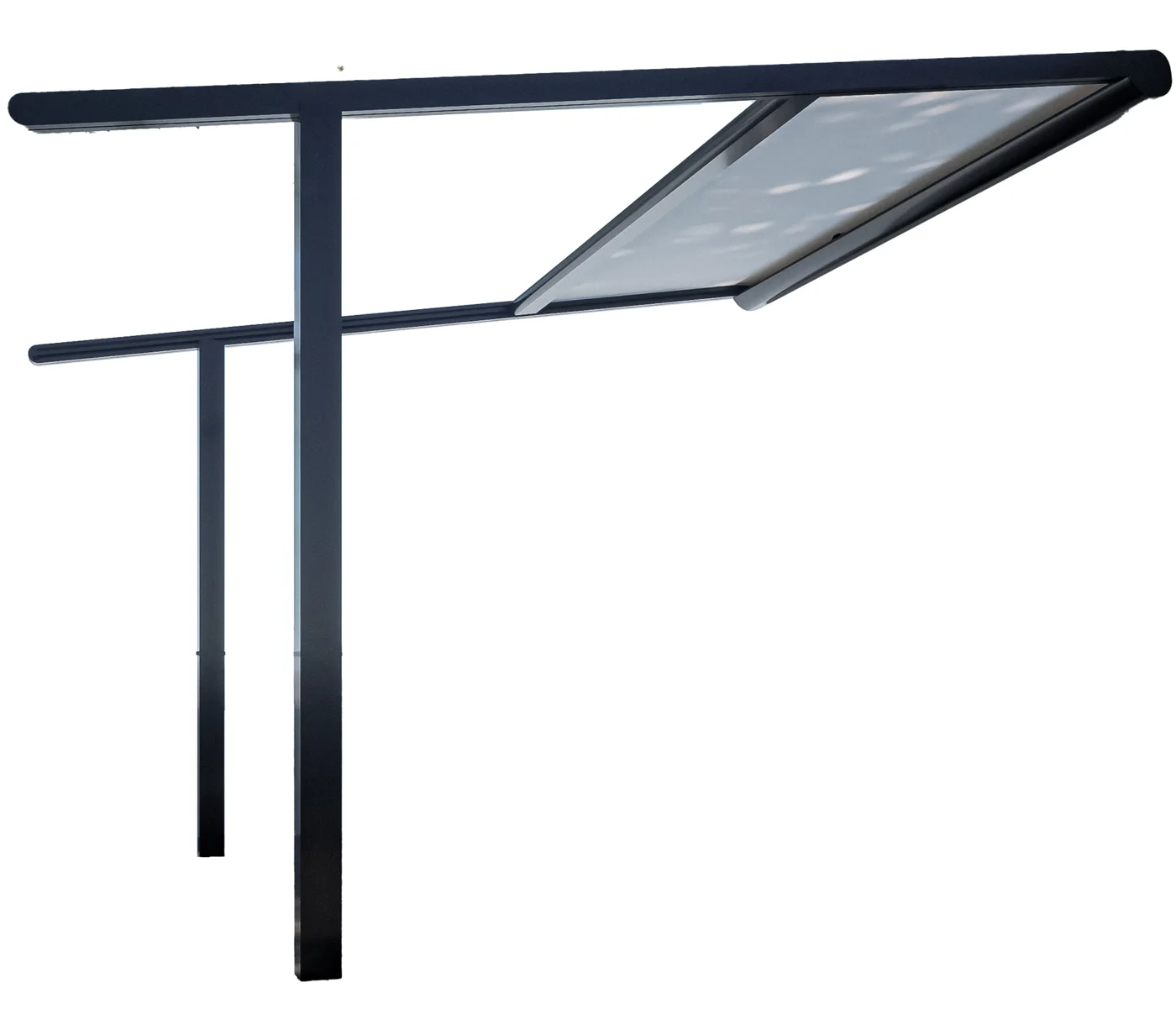
Privacy
A blockout fabric closes off overlooked terraces and balconies in seconds, and opens again when you want the view back.
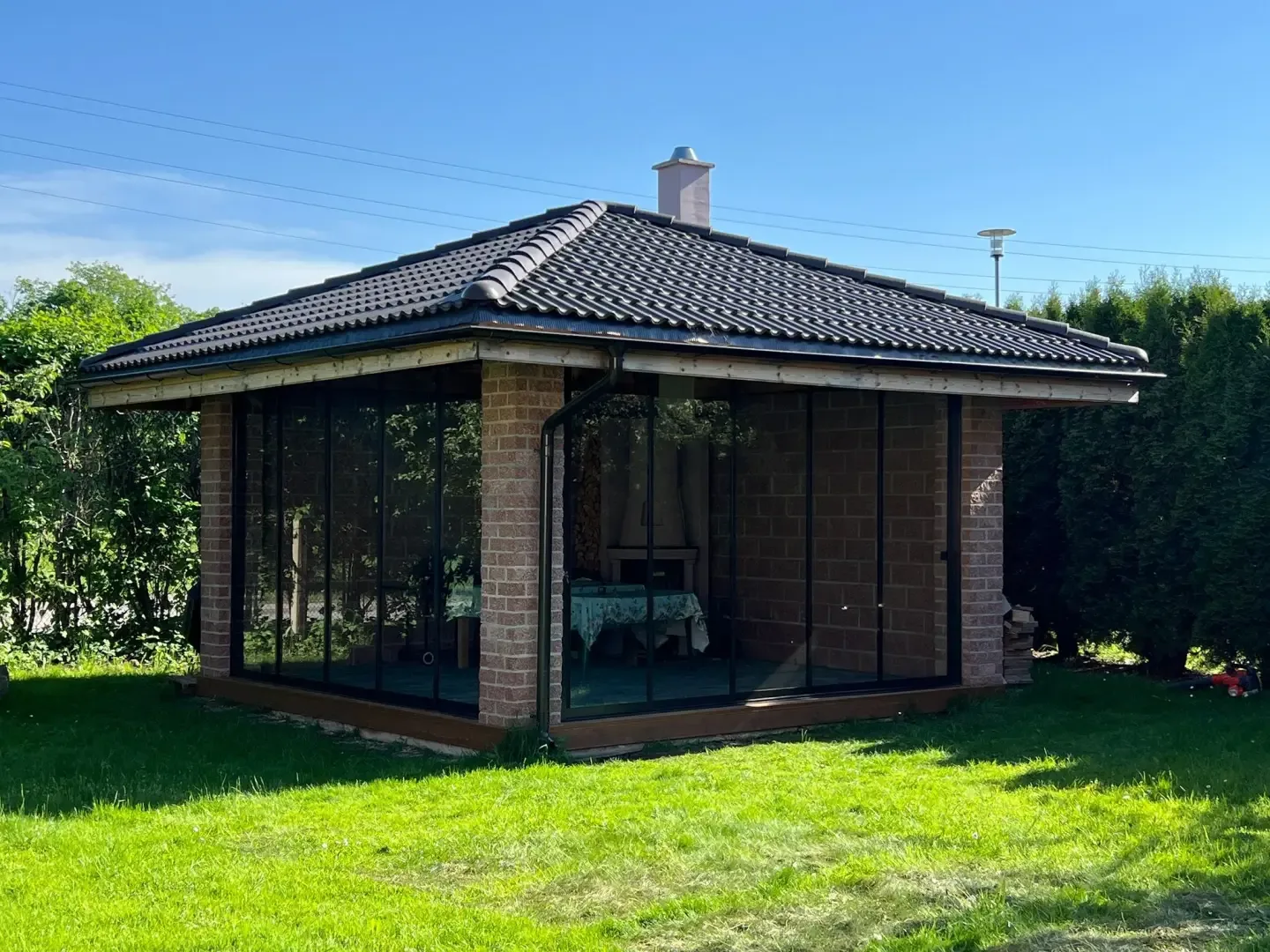
Wind Shelter
Locked guides mean the screens hold their shape in wind, which makes an exposed roof terrace usable far more of the year.
Restaurants, Cafés and Hotels
Zip screens turn an outdoor area into seating that works in wind, low sun and light rain. Fabrics can be printed with your branding, and screens can be dropped bay by bay so staff shade only the section that needs it.


Zip Screen Specification
| Feature | Specification |
|---|---|
| Maximum width | 5,500 mm |
| Maximum height | 4,000 mm |
| Maximum area per screen | 16 m² |
| Wind resistance | Wind-tunnel tested to 172 km/h |
| Fabric | Outdoor screen fabric, zip-welded edges, open-weave or blockout |
| Fabric printing | Custom printing available |
| Guides | Continuous aluminium side guides holding the zip |
| Cassette | Aluminium cassette with the fabric fully enclosed when open |
| Bottom bar | Weighted aluminium bottom bar |
| Motor | Tubular motor with remote, switch or smart-home control |
| Sensors | Sun and wind sensors optional |
| Finish | Powder-coated in any RAL colour; woodgrain transfer finishes available |
| Installation | Pergolas, glass rooms, verandas, balconies, windows and façades |
| Warranty | Manufacturer warranty on fabric, aluminium and motor |
Zip Screen FAQs
What is a zip screen blind?
A motorised outdoor blind whose fabric has a zip welded along both edges. The zip runs inside aluminium side guides, so the screen stays flat and locked in place instead of swinging in the wind like a normal awning.
How big can one screen be?
Up to 5,500 mm wide and 4,000 mm high, with a maximum area of 16 m² per screen. Wider openings are covered with screens side by side, one per bay.
How much wind can it take?
The fabric and aluminium components are wind-tunnel tested to 172 km/h. In practice the limit on any installation is the structure it is fixed to, which we check at the survey.
Does it stop rain and wind?
It blocks wind and driving rain well enough to keep a terrace usable, and the closed guides stop the screen flapping. It is a shading and shelter system, not a sealed glass wall — for a fully weatherproof enclosure use sliding glass or guillotine glass.
Can you still see out?
Yes. Screen fabrics come in different openness factors: an open weave keeps the view and cuts glare, a blockout fabric gives full privacy and shade. We show samples at the survey.
Will it keep insects out?
The zip-in-guide design closes both edges, so the screen keeps most insects and airborne dust out of the shaded area while air still passes through the fabric.
How is it controlled?
Remote handset, wall switch or smart home system. Sun and wind sensors can retract the screens automatically when the weather changes.
Can we print our logo on it?
Yes. Fabrics can be printed to order, which is common for restaurants, cafés and hotel terraces.
Where can zip screens be fitted?
Between pergola posts, on a glass room or veranda, across a balcony, over shop and café frontages, or on a building façade as solar shading.
How much do zip screens cost?
Price depends on the size, the number of screens, fabric choice, colour and controls. We quote a fixed price after a free survey — see our cost guide for typical budgets.
Free, No-Obligation Quote
Get your zip screen quote
Tell us how many openings you want to close, add the width and height of each one, and choose the fabric and controls. We come back with a fixed price — free and without obligation.
- Choose where the screens go and how you want to control them.
- Give the width and height of each opening in millimetres (max 5500 × 4000 mm per screen).
- Leave your details — we arrange a free survey and quote.
How to measure
- Measure each opening between the posts (e.g. 4000 mm).
- Measure the height from the beam to the floor (e.g. 2500 mm).
- Count the openings — each one takes its own screen.
- Photograph the terrace from outside and from inside.