
Motorised Zip Screen Roof Blinds · Made to Measure for UK Roofs
External Roof Blinds for Glass Roofs
Stop the heat before it reaches the glass. Our external roof blind is a motorised zip screen that runs horizontally above a glass roof, pergola or skylight, held flat by spring tension and controlled by remote or wall button — up to 6,000 × 6,000 mm in a single unit.
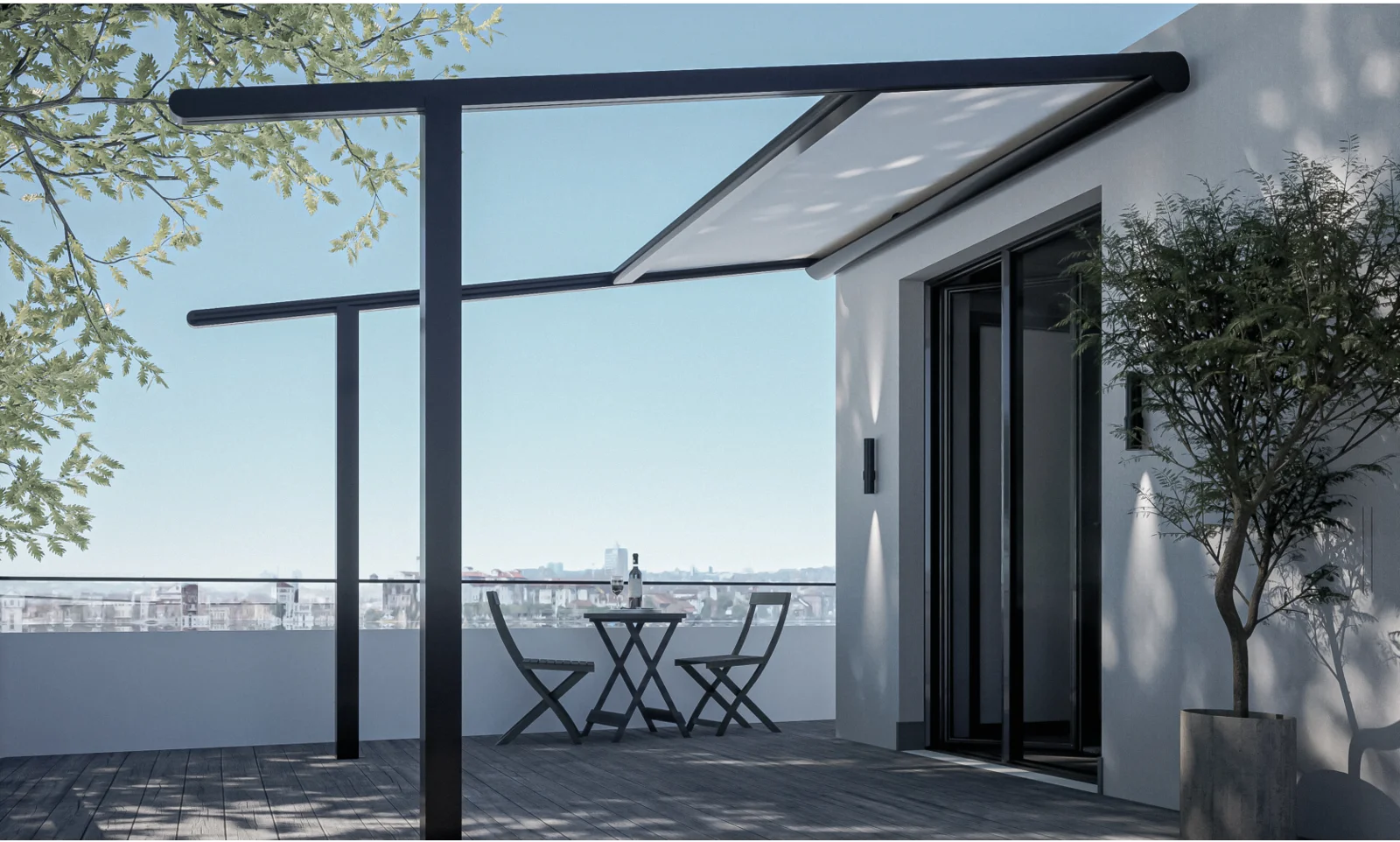
Why Fit an External Roof Blind?
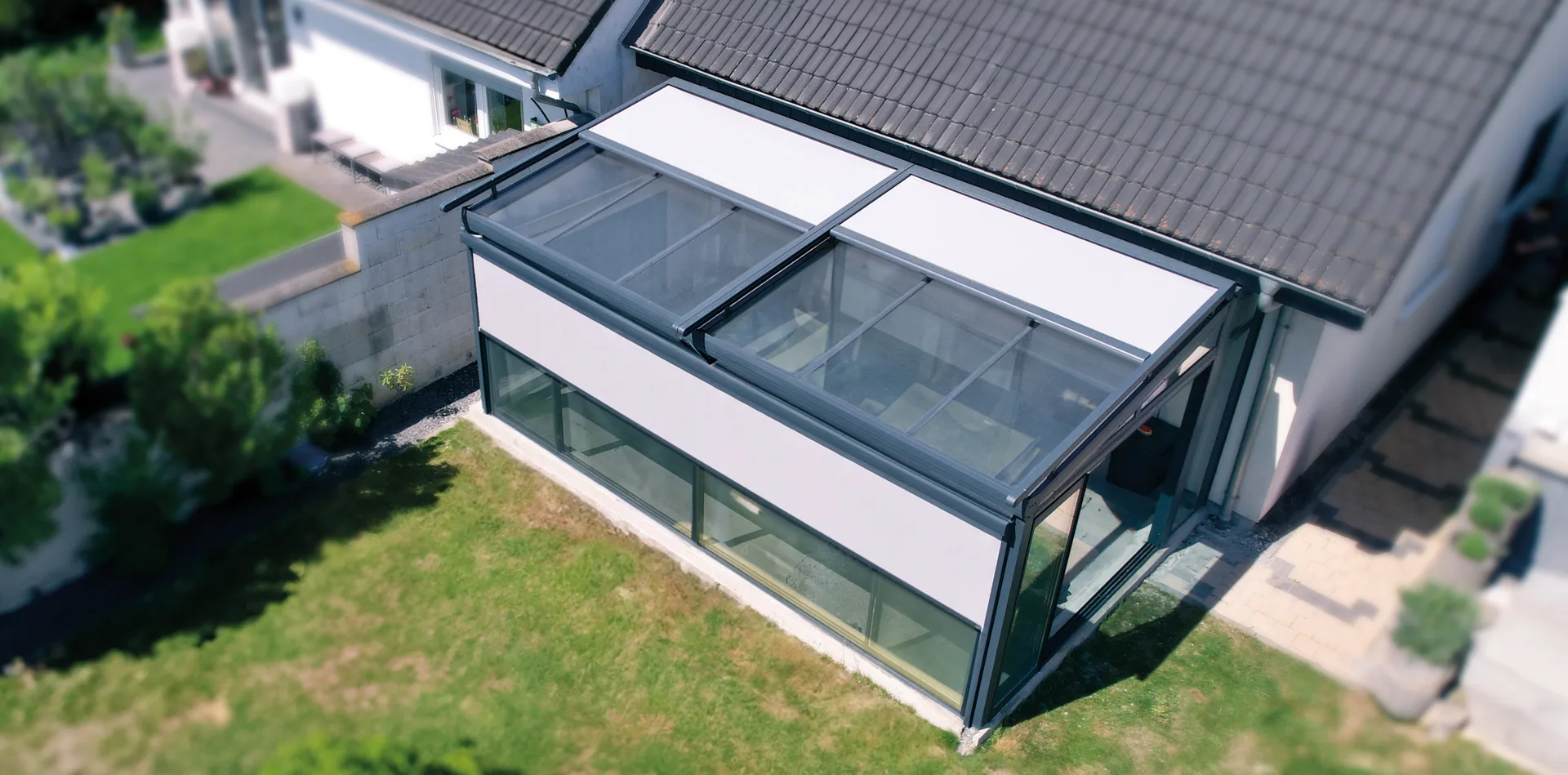
Glass roofs bring light — and heat. An external screen shades the glass from outside, so a conservatory, veranda or restaurant terrace stays usable on the hottest days without air conditioning working overtime. Fitted outside the glass, it is the most effective conservatory roof blind you can choose.
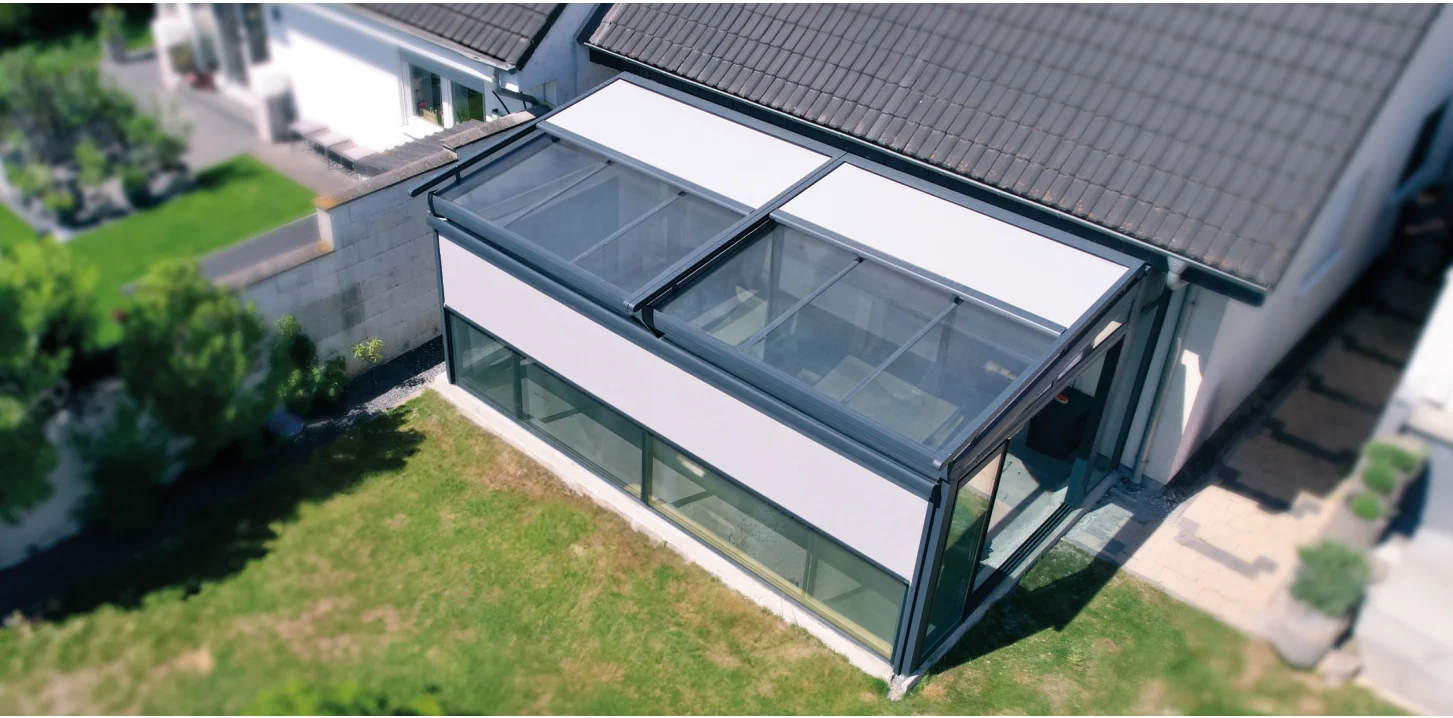
Heat Stopped Outside
Solar energy is blocked before it passes through the glass, which is where shading actually works. Internal blinds only absorb heat that is already inside. The most common use is as an external conservatory roof blind.
Flat, Taut Screen
The fabric is zipped into the side guides and tensioned by springs in the bottom rail, so it stays flat and quiet instead of sagging or flapping.
Insects and Glare Out
Closed guides keep insects and dust out of the shaded area, while the screen fabric cuts glare and still lets you see out.
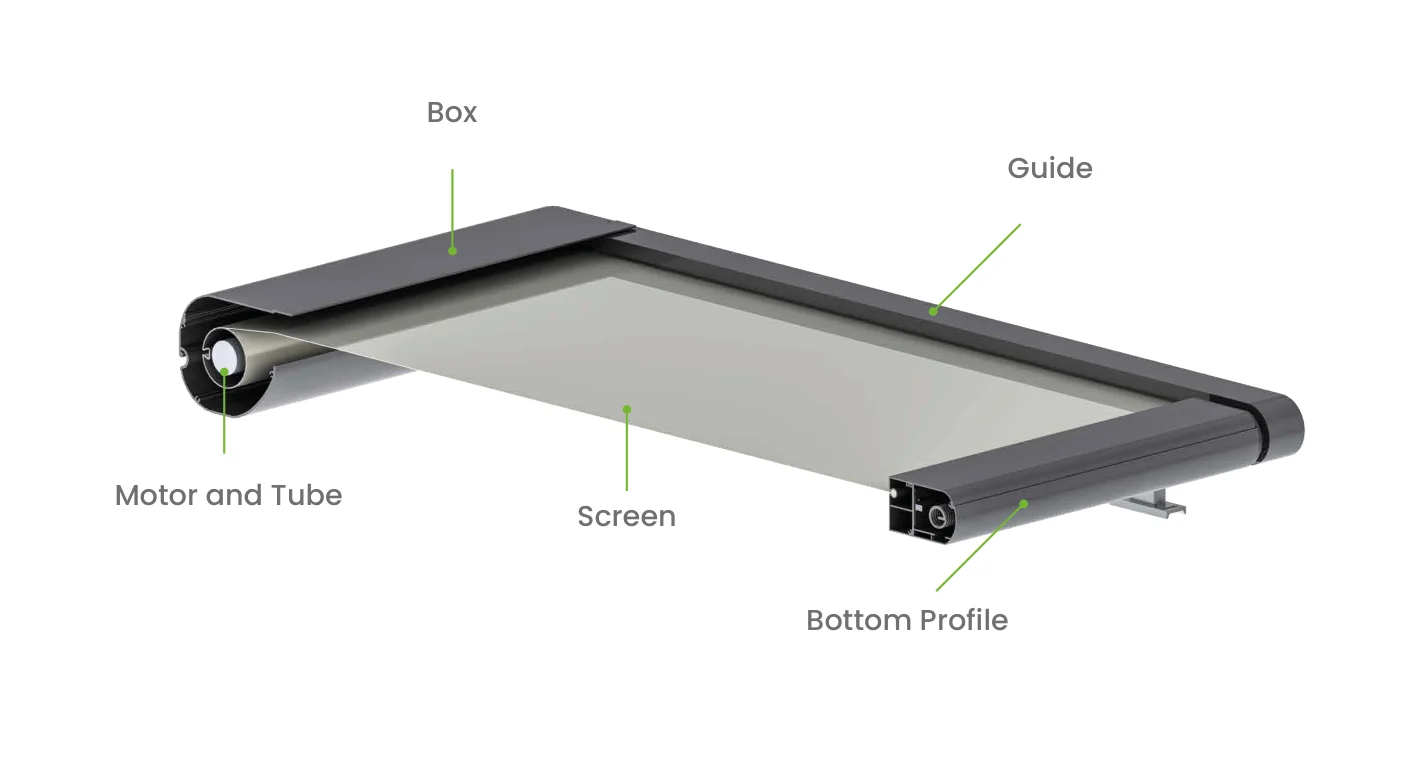
A Complete System
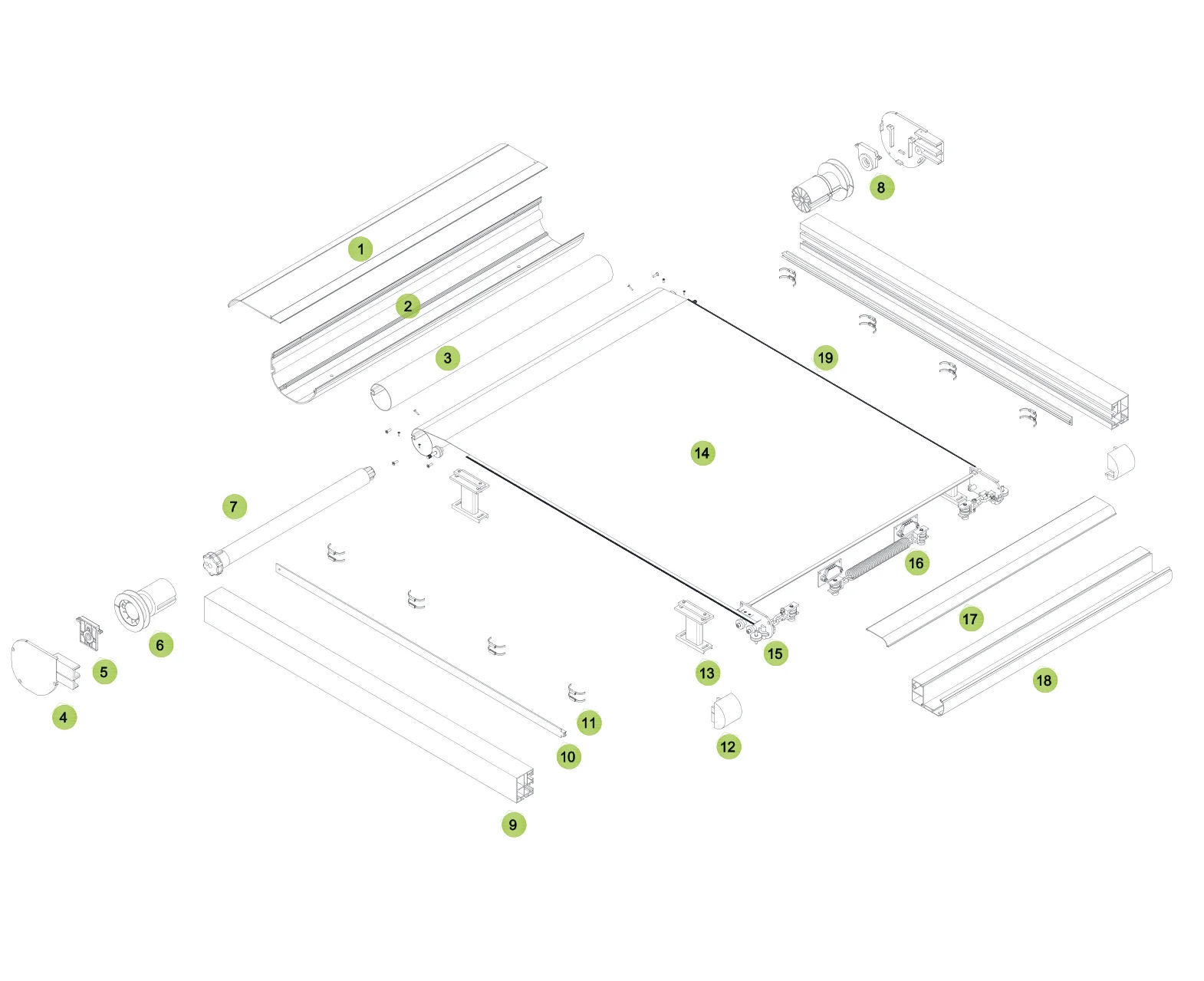
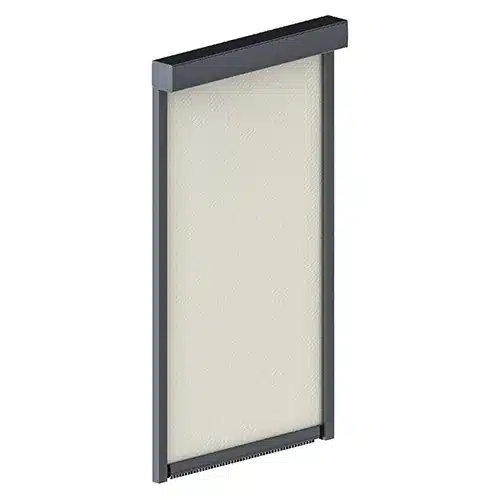
Cassette box, side guides, tube motor, screen fabric and weighted bottom profile — all designed to work together and fixed with purpose-made brackets.
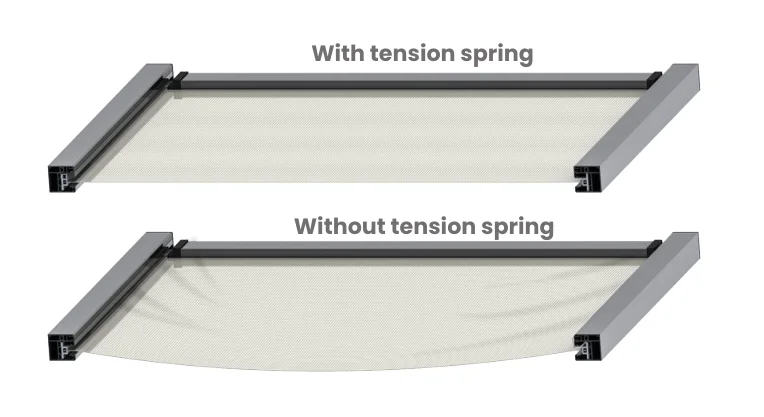
Spring Tension
Plastic tension springs inside the bottom rail hold the fabric taut across the whole span, which is what keeps a horizontal screen looking right.
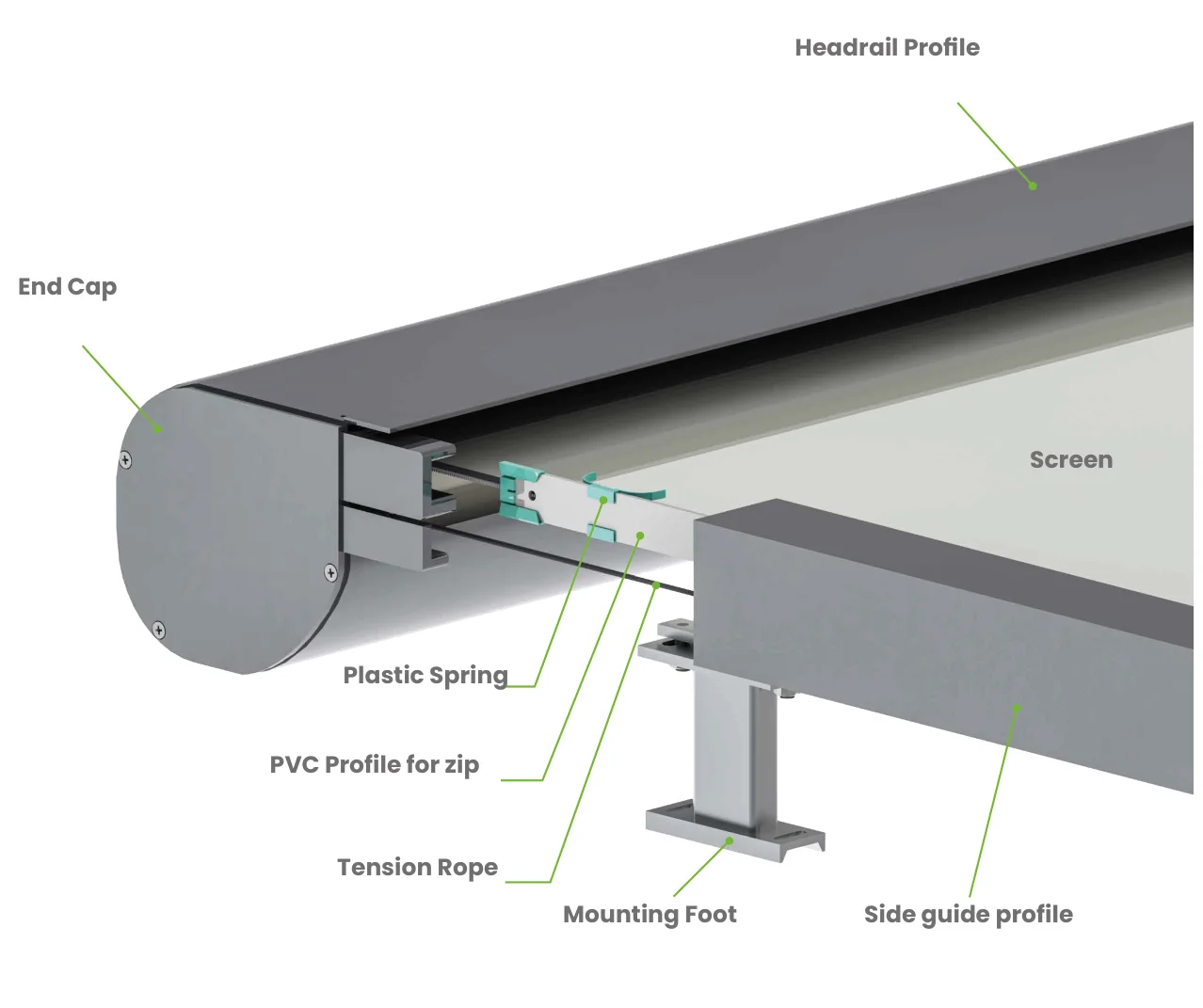
Weather-Sealed Detail
Brush seals, PVC zip profile and end caps close the system against wind-blown rain, dust and insects.
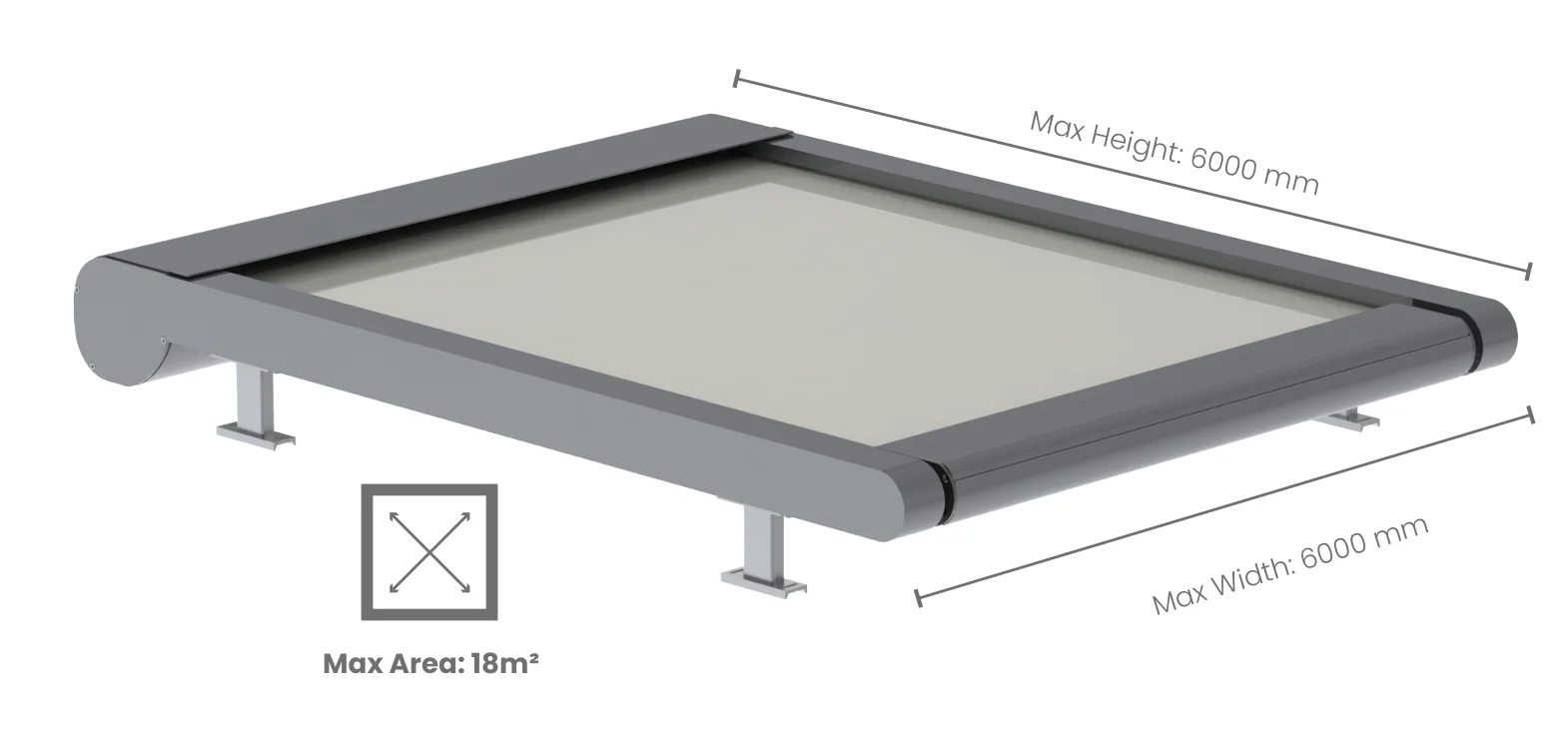
One Unit Covers Up to 6 × 6 Metres
A single external roof blind spans up to 6,000 mm wide and 6,000 mm deep — a maximum shaded area of 18 m². Wider roofs are covered by placing units side by side, one per bay, so the guides line up with the roof structure.
- Maximum width: 6,000 mm
- Maximum projection: 6,000 mm
- Maximum area per unit: 18 m²
- Larger roofs: several units, one per bay
We confirm the exact unit sizes at the free survey, after checking the roof bays, fixing points and drainage.
Where It Can Be Fitted
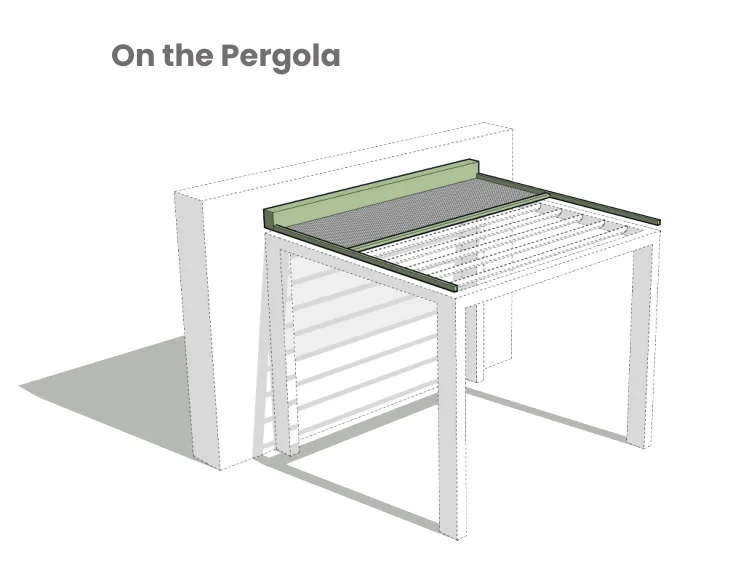
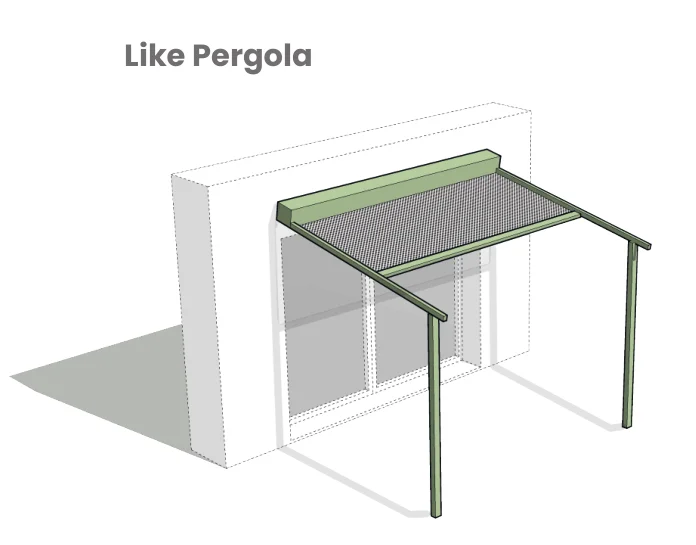
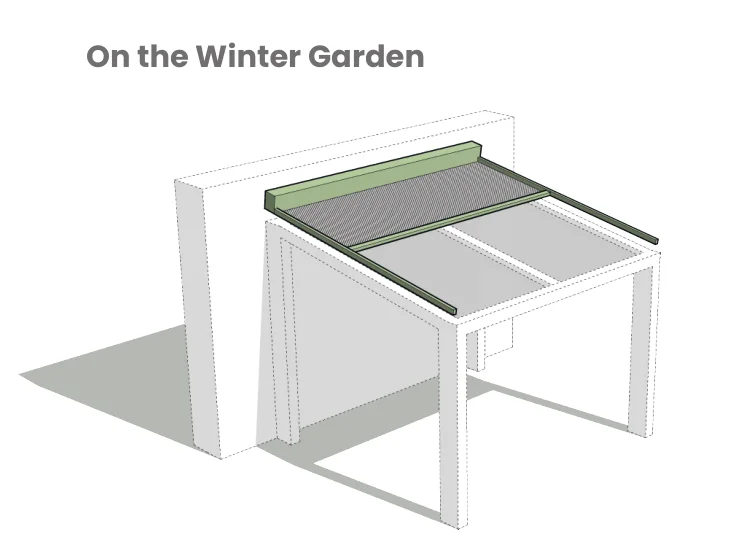
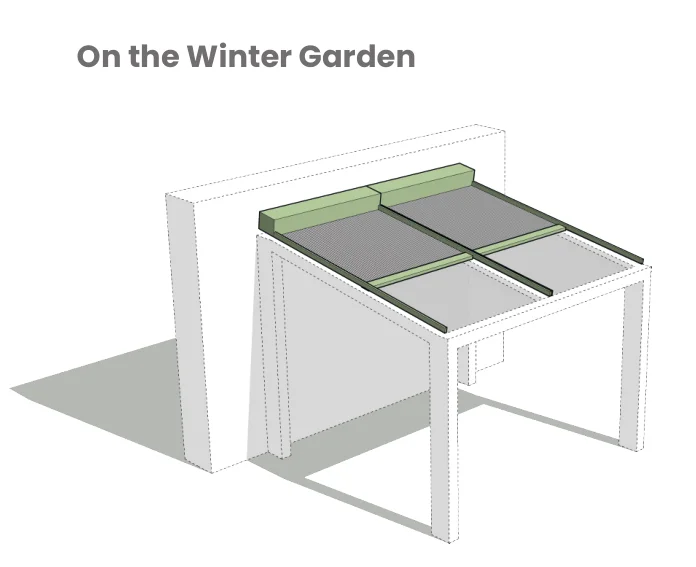
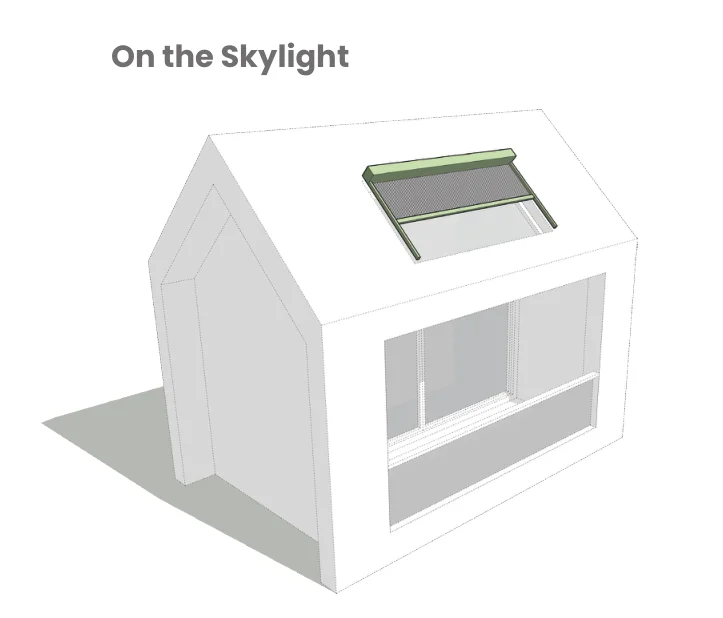
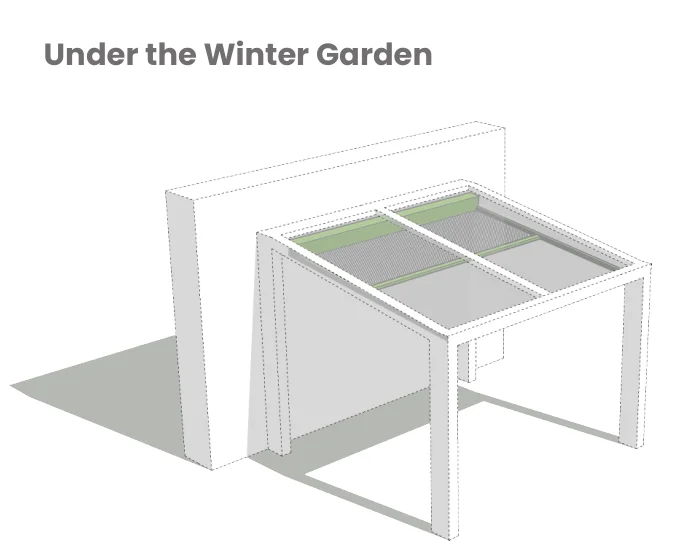
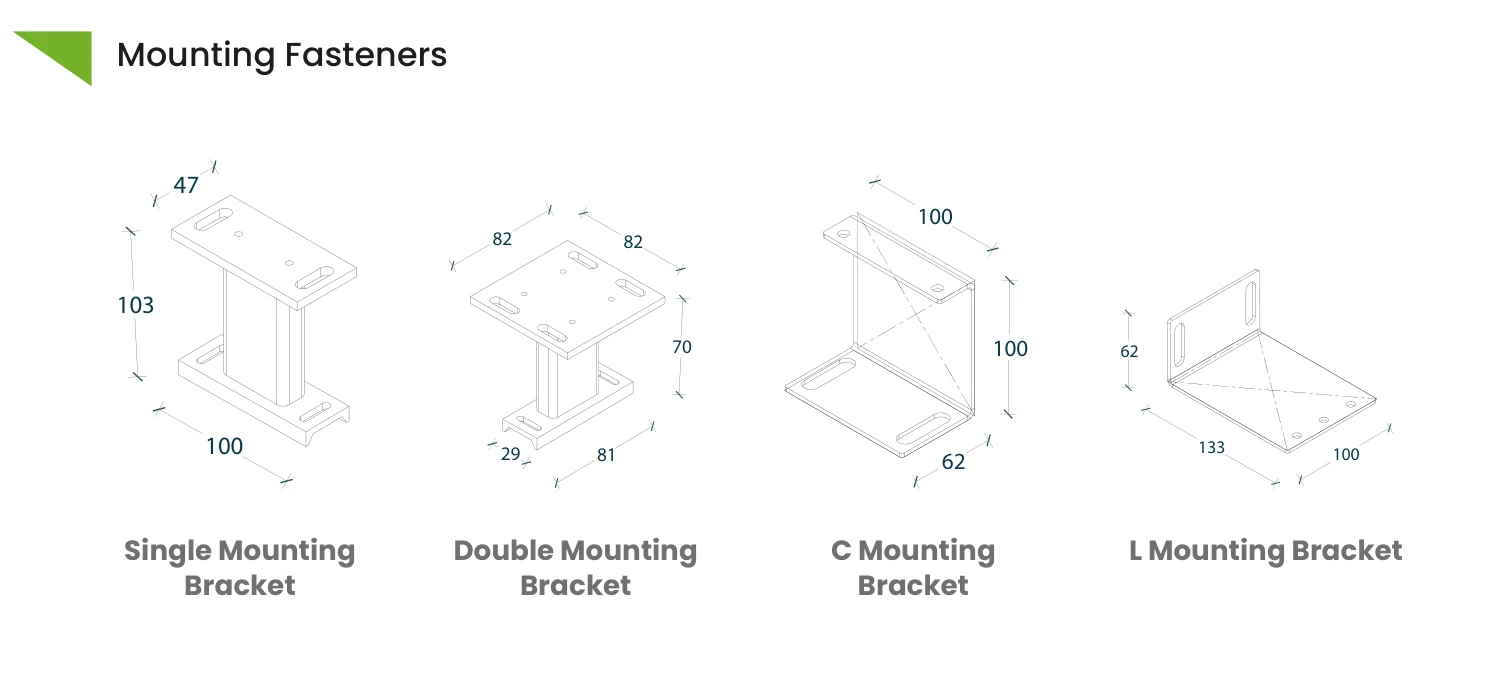
Single, double, C and L brackets cover the usual fixing conditions — timber, aluminium and masonry.
Controls: Remote, Wall Button or Both
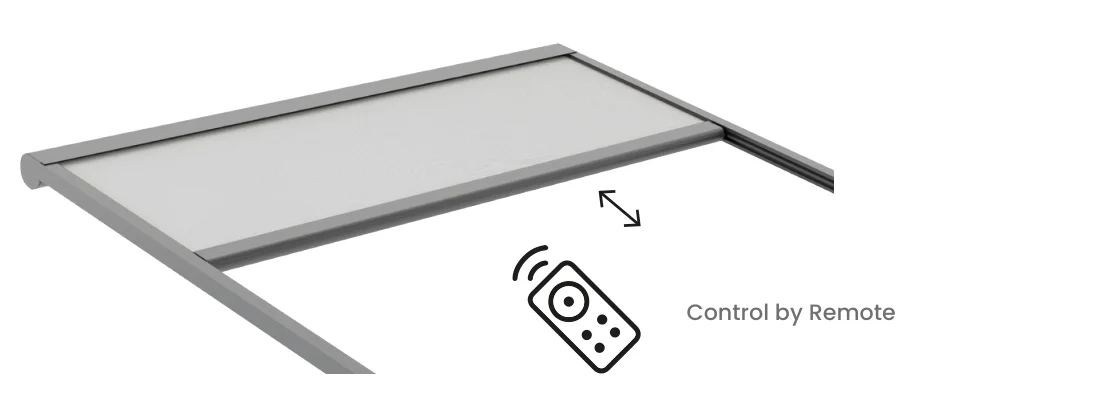
Remote Control
Open, close and stop the screen at any point from a handset — the usual choice for gardens and terraces.
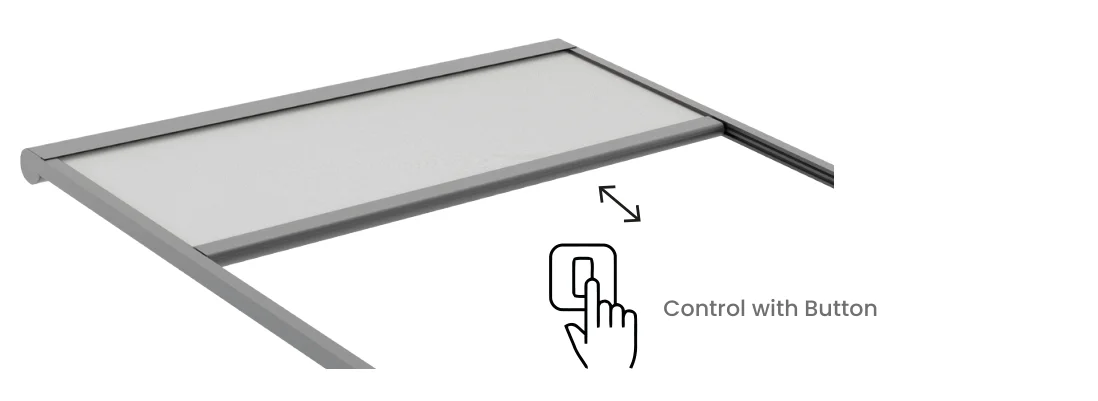
Wall Button
A fixed switch beside the door suits restaurants, cafés and shops where staff operate it daily.
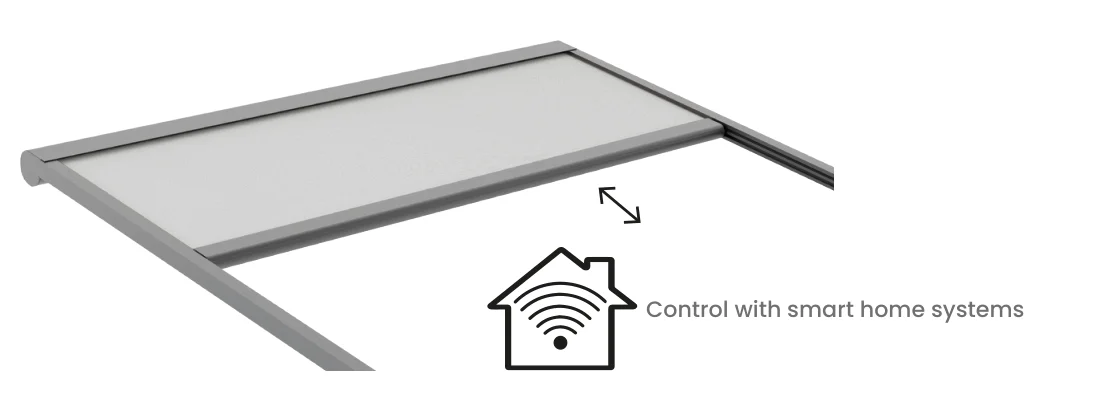
Smart Home
Connect the blind to a home automation system for timers, scenes and sun or wind sensor control. External blinds are the most effective shading for a glass conservatory roof.
German Motor Technology
Becker Motors as Standard
We fit Becker tubular motors as standard — German-engineered drives built for exactly this kind of outdoor screen, with quiet running, reliable limit setting and a long service life. Somfy motors are available if you prefer, or already use Somfy elsewhere in the house.
Becker publish full technical data for their zip screen drives on their own site: Becker zip screen motors.
- Becker tubular motor fitted as standard (Germany)
- Somfy motor available on request
- Quiet operation with precise end positions
- Sun and wind sensors optional
Cost Guide
What decides the price of external shading in the UK. Read the guide →
Pergola Ideas
Shading ideas for pergolas, verandas and roof terraces. See the ideas →
Free Site Survey
We measure the roof, check fixings and design the bays. Book your survey →
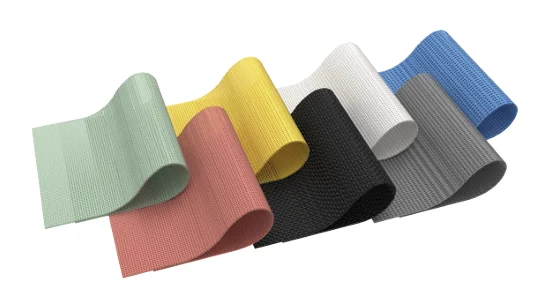
Fabrics, Colours & Profiles
Shade for Restaurants, Cafés & Hotels
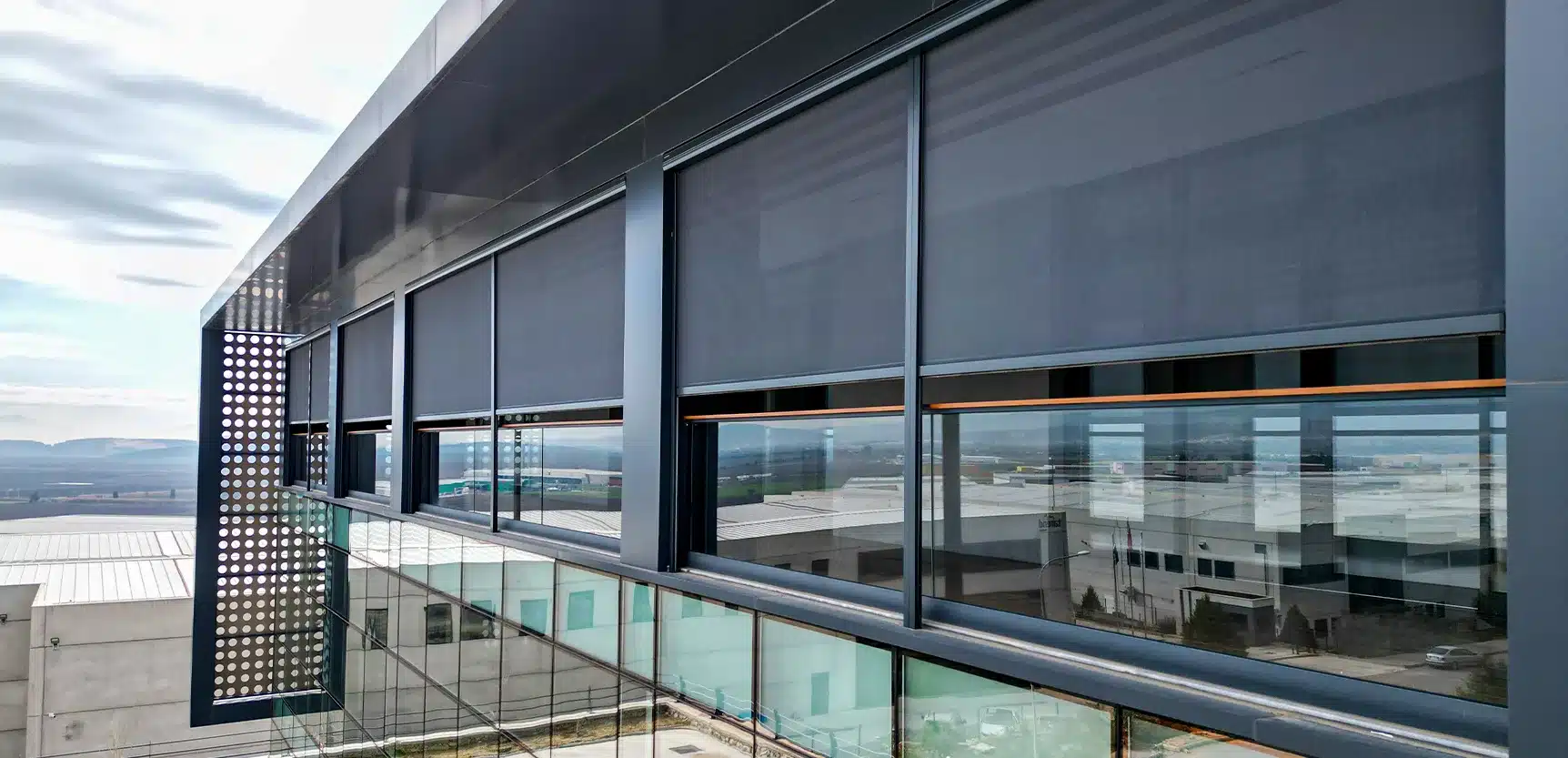
A horizontal roof blind turns a glazed terrace into a space guests can sit in all afternoon. Units can be zoned bay by bay, so staff shade only the section in the sun, and wind sensors retract the screens automatically when the weather turns.
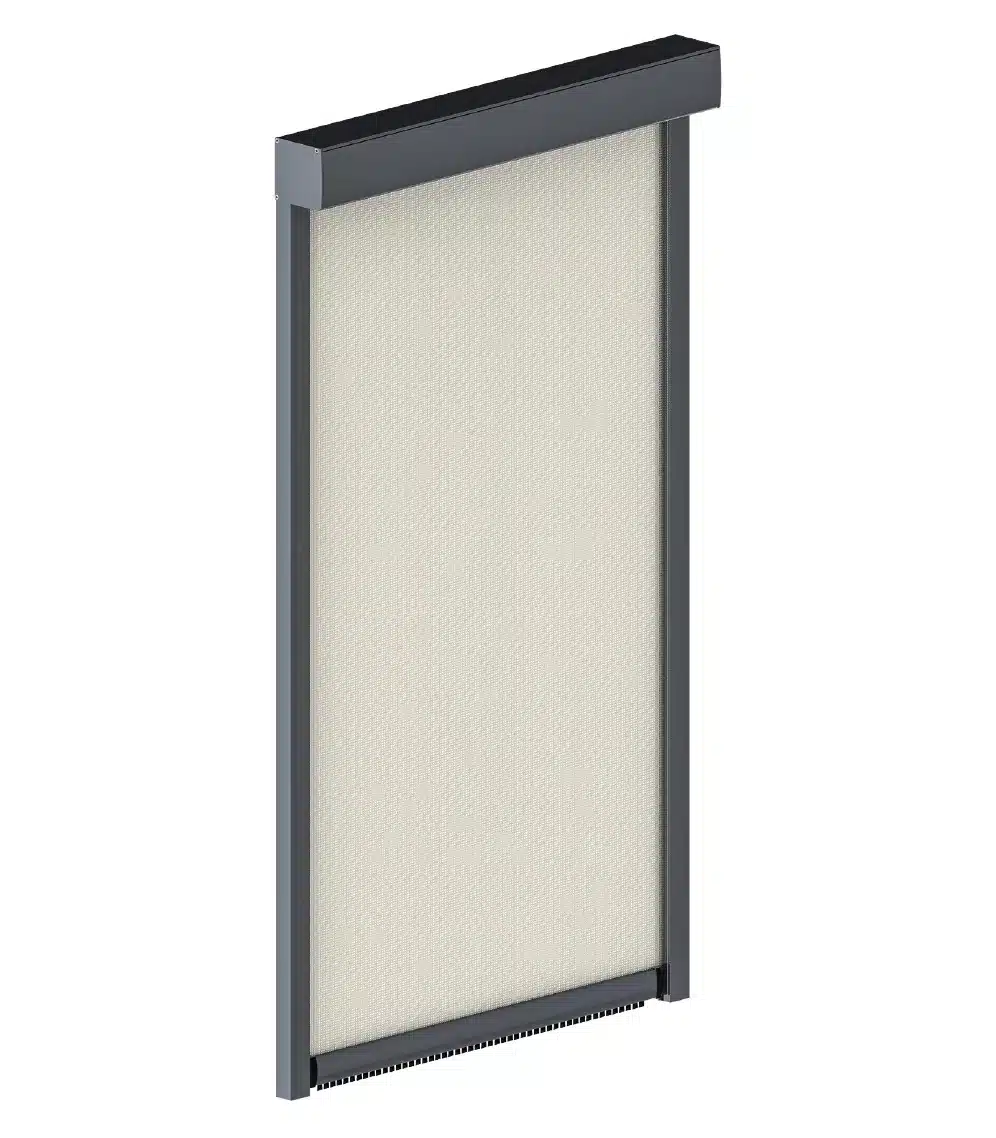
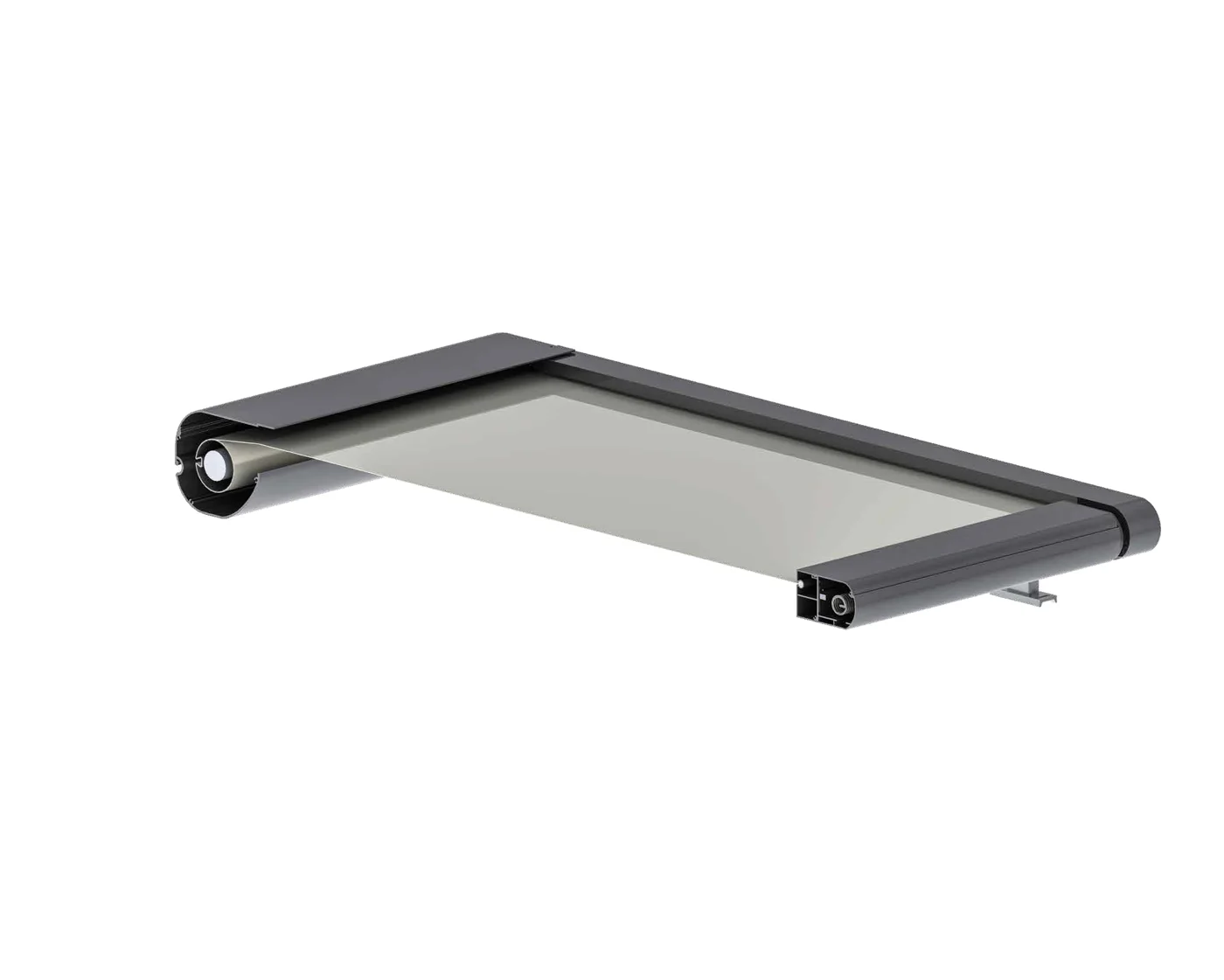
External Roof Blind Technical Details
| Feature | Specification |
|---|---|
| Maximum width | 6,000 mm |
| Maximum projection | 6,000 mm |
| Maximum area per unit | 18 m² |
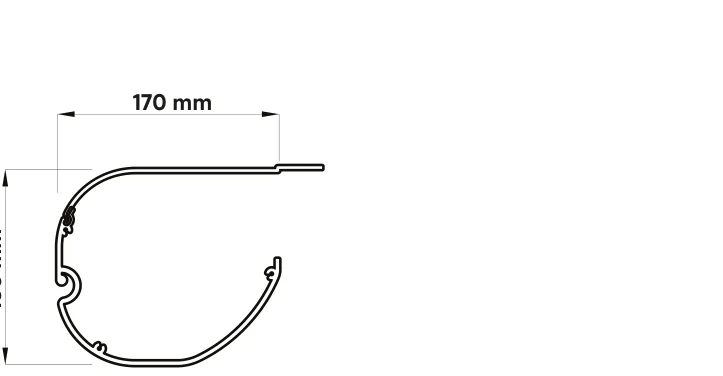
| Cassette box | 170 × 150 mm |
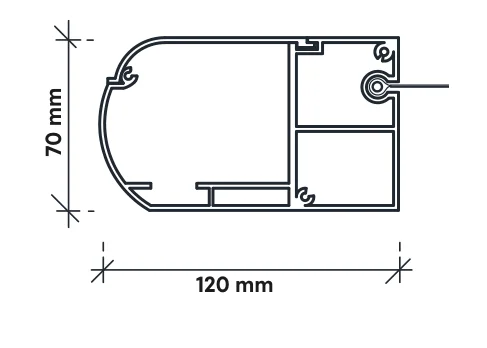
| Bottom profile | 120 × 70 mm |
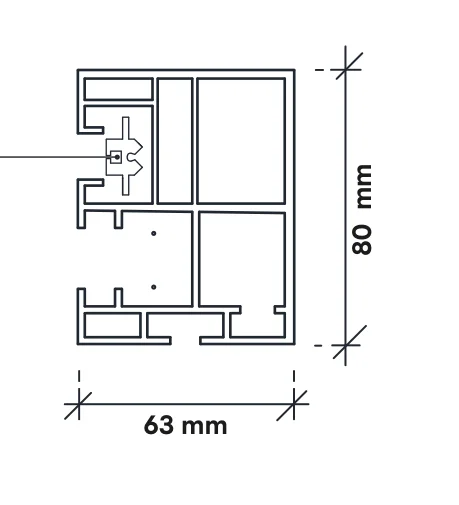
| Side guide profile | 63 × 80 mm |
| Weight profile | 25 × 13 mm galvanised bar |
| Roller tube | 78 mm galvanised steel tube |
| Motor | Becker tubular motor (standard, Germany) · Somfy on request |
| Control | Remote handset · wall button · both · smart home system |
| Sensors | Sun and wind sensors optional |
| Fabric | Copaco and Serge Ferrari screen fabrics, wide colour and openness range |
| Fabric tension | Zip in side guides with plastic tension springs in the bottom rail |
| Sealing | Brush seals, PVC zip profile, end caps |
| Mounting | Single, double, C or L brackets |
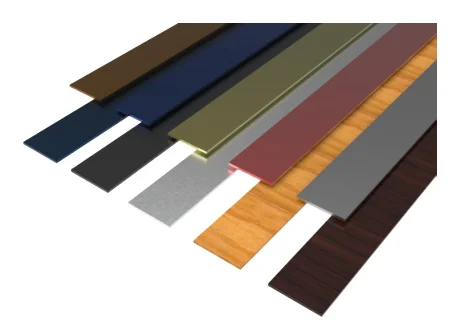
| Finish | Powder-coated in any RAL colour; woodgrain transfer coating available |
| Fitting positions | On a pergola · own pergola frame · on or under a winter garden roof · over a skylight |
| Packing | Screen box 300 × 220 mm · side guide box 215 × 85 mm |
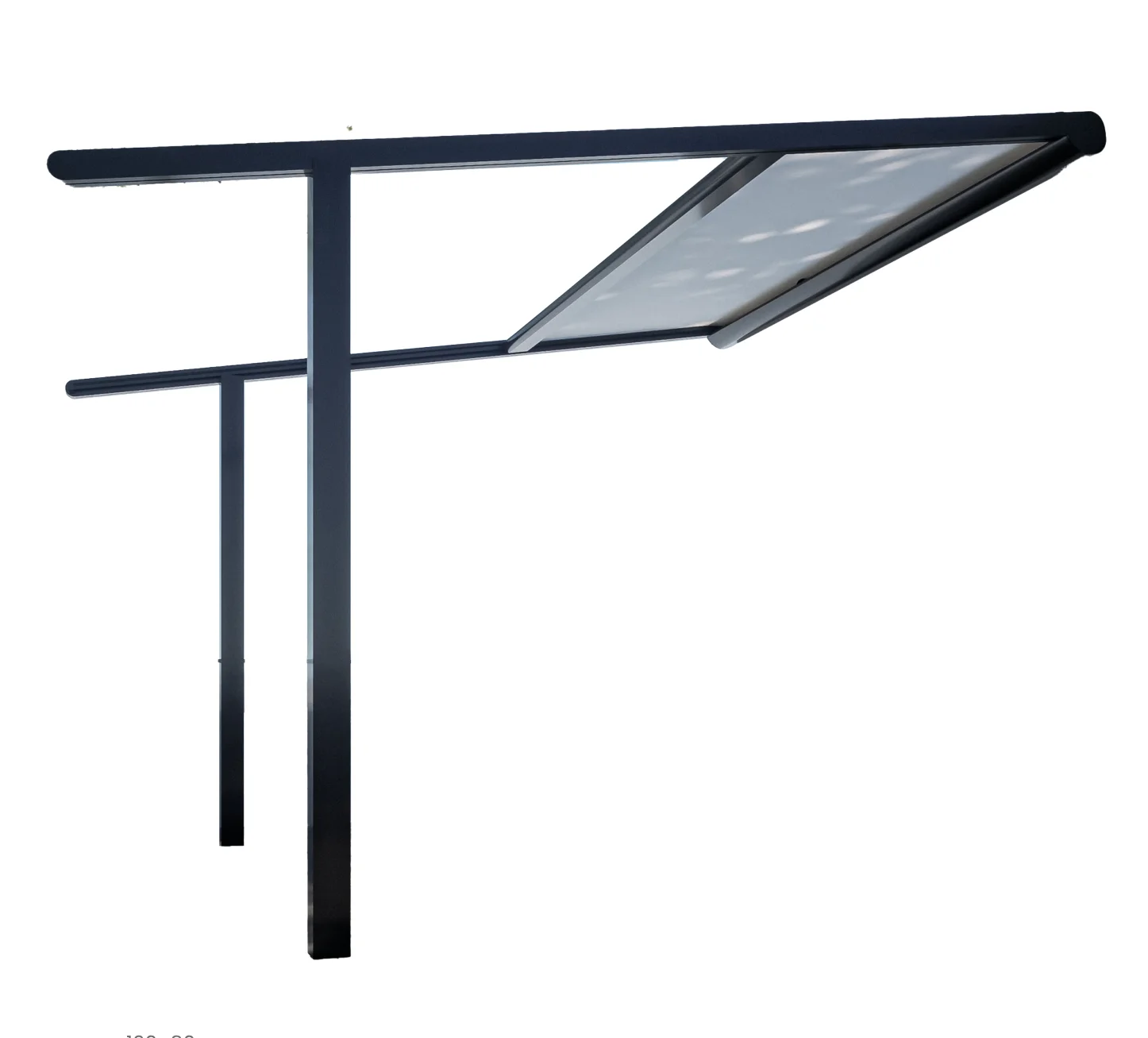
External Roof Blind FAQs
What is an external glass roof blind?
It is a motorised zip screen fitted horizontally above or below a glass roof. The fabric runs in side guides and is held taut by a spring-loaded bottom rail, so it stops sunlight outside the glass instead of letting it heat the room first.
How big can one roof blind be?
A single unit covers up to 6,000 mm wide by 6,000 mm deep — a maximum area of 18 m². Larger roofs are covered by placing several units side by side, one per bay.
Is it better to fit the blind outside or inside the glass?
Outside. An external blind blocks solar heat before it reaches the glass, which is far more effective than an internal conservatory roof blind. The system can also be fitted underneath a glass roof when access or appearance calls for it.
Which motor do you supply?
Our standard motor is Becker, made in Germany, chosen for quiet running and long service life. Somfy motors are available on request. Becker publish their own technical information on their zip screen motor range.
How is it controlled?
Remote handset, a fixed wall button, or both together. It can also be connected to a smart home system, and sun or wind sensors can be added.
Does the fabric stay taut?
Yes. A zip welded to the fabric edge runs inside the side guides, and plastic tension springs in the bottom rail keep the screen flat rather than sagging — even at 6 m spans.
Will it keep out insects and dust?
The zip-in-guide design closes the gap at both edges, so the screen keeps insects and airborne dust out of the shaded area while still letting air through the fabric.
Can it be left out in bad weather?
The fabric and aluminium components are made for outdoor use, including rain, sun, snow and wind. As with any tensioned screen, we recommend retracting it in storm conditions, and a wind sensor can do that automatically.
What fabrics and colours are available?
Screen fabrics from Copaco and Serge Ferrari in a wide range of colours and openness factors. All aluminium parts are powder-coated in any RAL colour, with woodgrain finishes available.
Where can it be fitted?
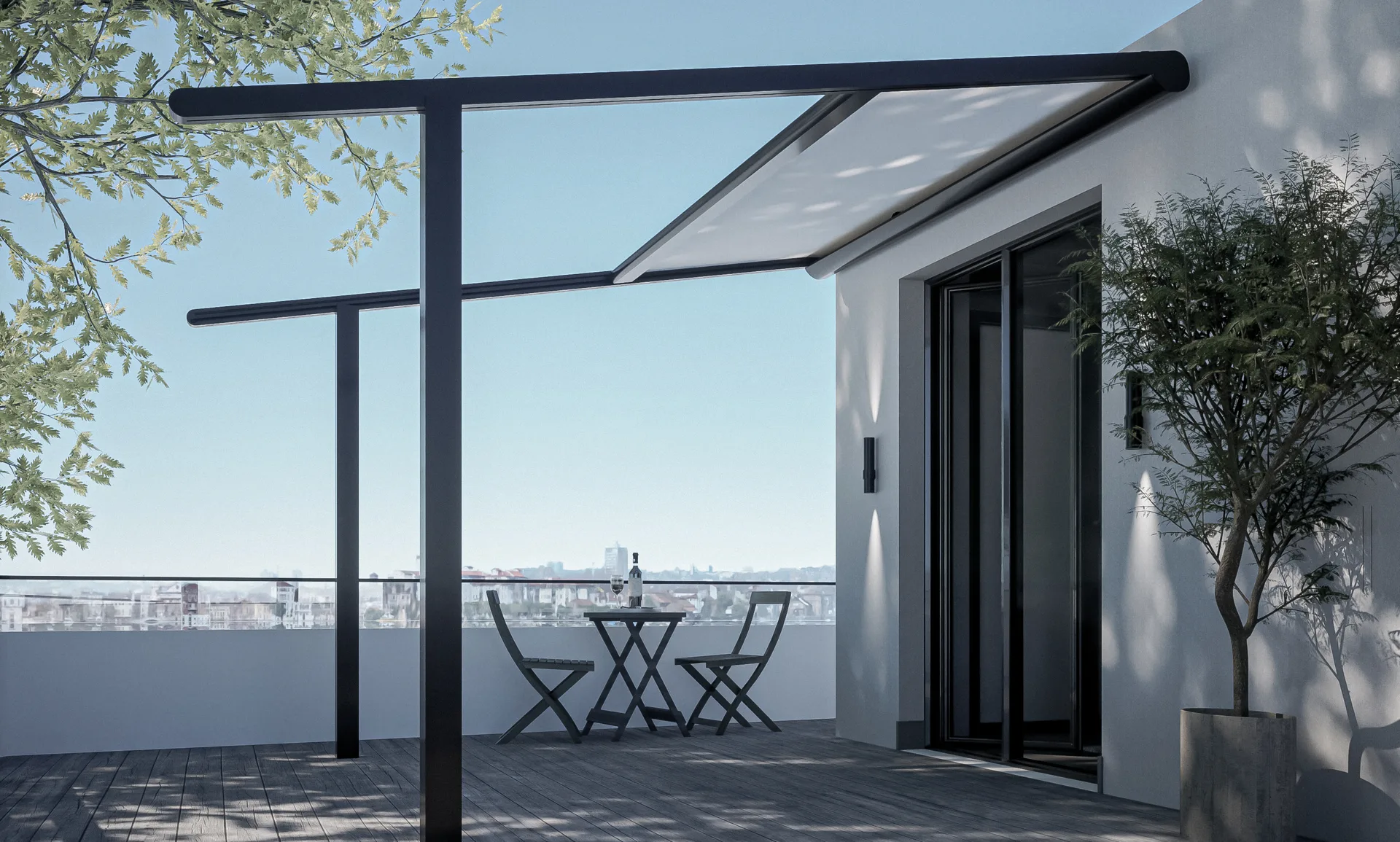
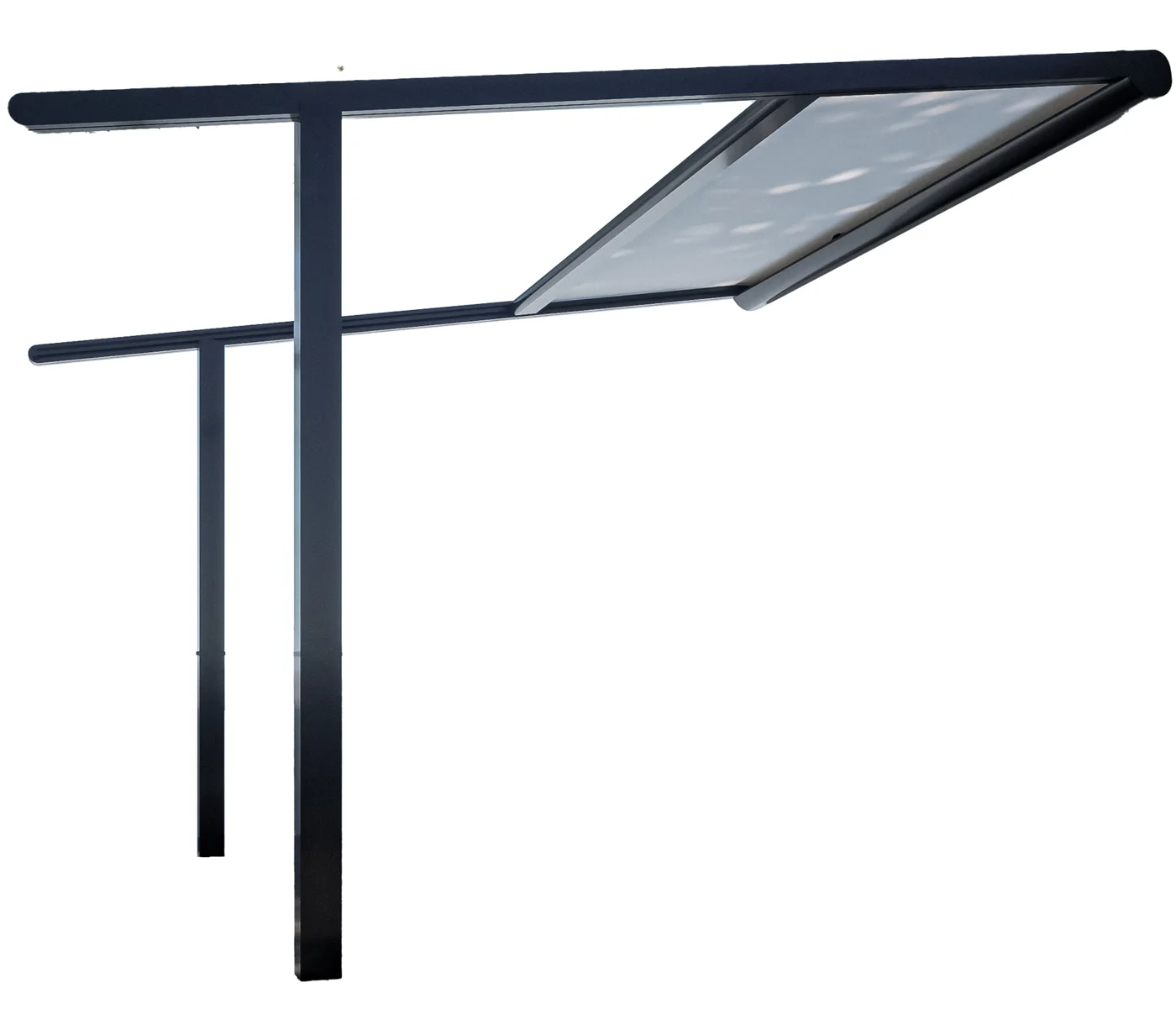
On top of a pergola, on its own pergola frame, over or under a winter garden roof, above a skylight, or on a glass veranda. See the layout options above.
How much does an external roof blind cost?
It depends on the area, the number of units, fabric choice, motor and controls, and how easy the roof is to reach. We give a fixed price after a free survey — see our cost guide for typical budgets.
What warranty is there?
The system carries the manufacturer warranty, and the Becker motor carries the motor maker’s own warranty. Exact terms are confirmed in writing with your quote.
Free, No-Obligation Quote
Get your external roof blind quote
Tell us what you want to shade, choose your fabric, motor and controls, and add the roof sizes. We prepare a bay layout and a detailed quote — free and without obligation.
- Choose where the blind is fitted and how you want to control it.
- Add the width and projection of each roof bay in millimetres (max 6000 × 6000 mm per unit).
- Leave your details — we arrange a free survey and quote.
How to measure
- Measure the width of the glass roof or pergola bay (e.g. 4000 mm).
- Measure the projection from the wall to the front edge (e.g. 3500 mm).
- Count the bays — each one usually takes its own unit.
- Photograph the roof from outside and from underneath.